Public-facing interiors
Lobbies, Restrooms, And Hospitality Spaces
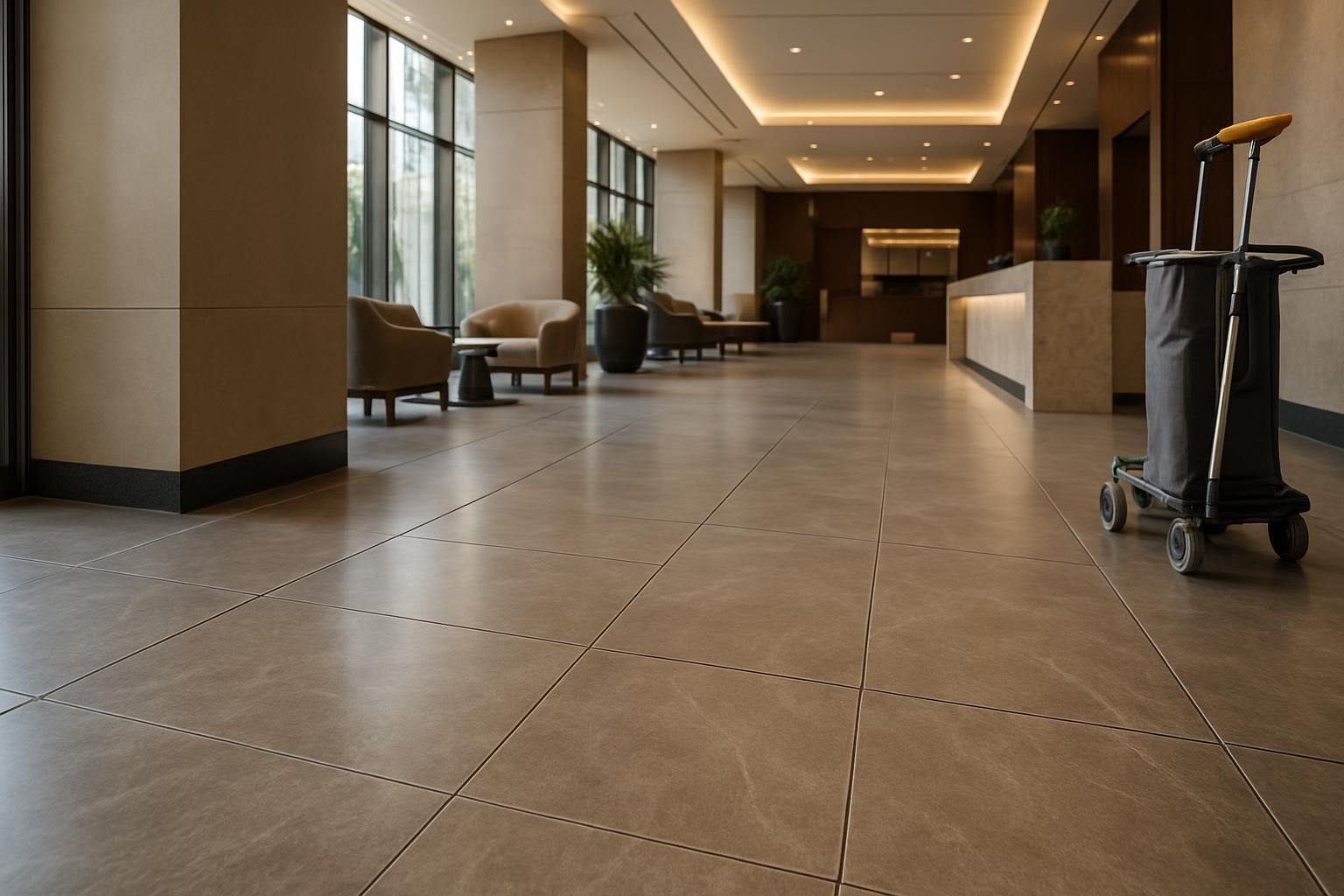
Tile and stone are often selected where the finish has to support both everyday durability and a more intentional visual presentation.
We use analytics cookies to understand site performance and improve your experience. You can accept or decline analytics cookies. Learn more in our privacy policy.

Tile and stone flooring contractor
Tile and stone systems installed around substrate prep, waterproofing, movement, layout quality, and long-term finish performance.
Tile and stone systems support commercial flooring projects, restaurant interiors, healthcare support spaces, and selected residential specialty flooring. Where slab condition is the main issue, compare this scope with overlay systems or project examples.
Service Overview
Tile and stone flooring installation depends on far more than selecting the right finish material. The durability and appearance of the installation are shaped by substrate prep, layout control, movement detailing, waterproofing, and the quality of the installation sequence itself.
Showcase Finishing Systems installs tile and stone flooring systems, wall finishes, and related assembly components for commercial, residential, institutional, hospitality, and selected high-expectation interiors across New Jersey, Greater Philadelphia, and the Northeast.
That assembly-first approach matters most in lobbies, restrooms, kitchens, and public interiors where waterproofing details, edge conditions, and movement strategy decide whether the finish still looks right years later.
Best Fit Environments
Public-facing interiors
Tile and stone are often selected where the finish has to support both everyday durability and a more intentional visual presentation.
Technical detailing
Waterproofing, movement joints, and edge conditions matter just as much as the finish material itself.
Large-format installs
Modern tile systems often require flatter substrates, tighter layout control, and a more disciplined installation sequence.
System Paths
Installation types
A versatile, durable option for floors and walls across a wide range of commercial, residential, and institutional environments.
Installation types
Stone systems require more material-specific handling, sealing strategy, and finish protection during the build.
Installation types
Movement joints, profiles, membranes, and transitions are critical to long-term performance in complex environments.
Installation Process
Frequently Asked Questions
Tile and stone flooring installation is typically chosen when a project needs design flexibility, durability, cleanability, and long-term finished appearance in a space that cannot be treated like a basic finish-only floor replacement.
Tile and stone flooring installation is commonly used in lobbies, bathrooms, commercial restrooms, hospitality spaces, wet areas, residential interiors, public interiors, and finish-driven commercial projects throughout New Jersey, Greater Philadelphia, and the Northeast.
Owners usually choose this system when they need design flexibility, durability, cleanability, and long-term finished appearance without compromising the way the space has to operate every day.
Tile and stone can perform for many years when the substrate, installation materials, movement strategy, and maintenance approach are all handled correctly.
Schedule depends on substrate prep, waterproofing, pattern complexity, material type, room count, and whether other trades are sharing the same sequence.
Downtime is driven by prep, cure times, grout and setting materials, access constraints, and protection requirements before the area can take traffic.
Preparation often includes flattening, patching, crack treatment, waterproofing, edge detailing, movement planning, and verifying the assembly is ready for finish tile or stone.
Sometimes, but many projects perform better when existing finishes are removed so the substrate can be corrected and the new assembly can be built properly.
Yes, slip performance can be addressed through tile selection, finish texture, grout layout, and where the material is used.
Maintenance depends on the material and finish. In general, consistent cleaning, proper chemistry, and protecting grout and stone surfaces are key.
Yes. Tile and stone are common in many commercial and institutional environments where visual quality and durability both matter.
Sometimes. It depends on the abuse level, wet conditions, and whether a tile or stone assembly is the right performance fit for the operation.
Yes. Material size, pattern, grout, finish, edge profiles, and transition detailing all shape the final result.
The best comparison usually turns on traffic, substrate condition, maintenance goals, moisture exposure, finish expectations, and schedule. We compare those conditions directly so the decision is based on the job, not a generic material preference.
Tile and stone can perform very well, but the right specification depends on water exposure, maintenance routines, impact risk, and the movement conditions of the substrate.
Repairs are possible, but repair visibility depends on the tile or stone selected, the age of the floor, and whether matching material is still available.
Material type, format size, pattern complexity, waterproofing, substrate correction, edge conditions, and schedule constraints all affect tile and stone pricing.
It is a strong choice when the goal is a durable finish-driven assembly, especially in spaces where visual quality, cleanability, and detail matter.
The fastest path is to share the space type, square footage, substrate condition, schedule, and desired finish. That lets us recommend the right system and scope the estimate more accurately for projects in New Jersey, Greater Philadelphia, and the Northeast.
We treat tile and stone as a full assembly problem, not just a finish purchase, which leads to better performance and cleaner long-term results.
Next Step
Every flooring scope works better when the system is selected around real traffic, substrate condition, maintenance demands, and schedule constraints. That is especially true on service pages like this one, where the wrong specification can look fine on paper but underperform in the field.
If you are comparing options, planning a renovation, or trying to determine whether repair, restoration, or replacement is the better path, keep moving through the site. Review related projects, compare industries similar to your facility, or return to the full services hub before you commit to the wrong system.
Detailed Service Pages
Use these focused pages when your project needs a more specific flooring system, finish, or installation detail.
Porcelain, ceramic, quarry, and specialty tile flooring for commercial, residential, hospitality, and institutional spaces.
Residential tile installation for bathrooms, showers, kitchens, backsplashes, entries, and specialty finished interiors.
Natural stone floor installation planned around substrate, layout, transitions, sealers, and maintenance.
Marble and premium stone installation for floors, walls, features, and detail-driven finish packages.
Terrazzo-related finish coordination where the project requires specialty hard-surface planning.
Mosaic tile work for detailed floors, walls, accents, wet areas, and hospitality finishes.
Waterproofing and wet-area preparation for showers, restrooms, kitchens, and moisture-sensitive tile areas.
Uncoupling and movement-management assemblies used where substrate movement may affect tile performance.
Grout, caulk, movement joint, and transition detailing for tile and stone system durability.
Tile and stone wall installations for commercial, residential, hospitality, restroom, and kitchen spaces.