Showcase Finishing Systems logo
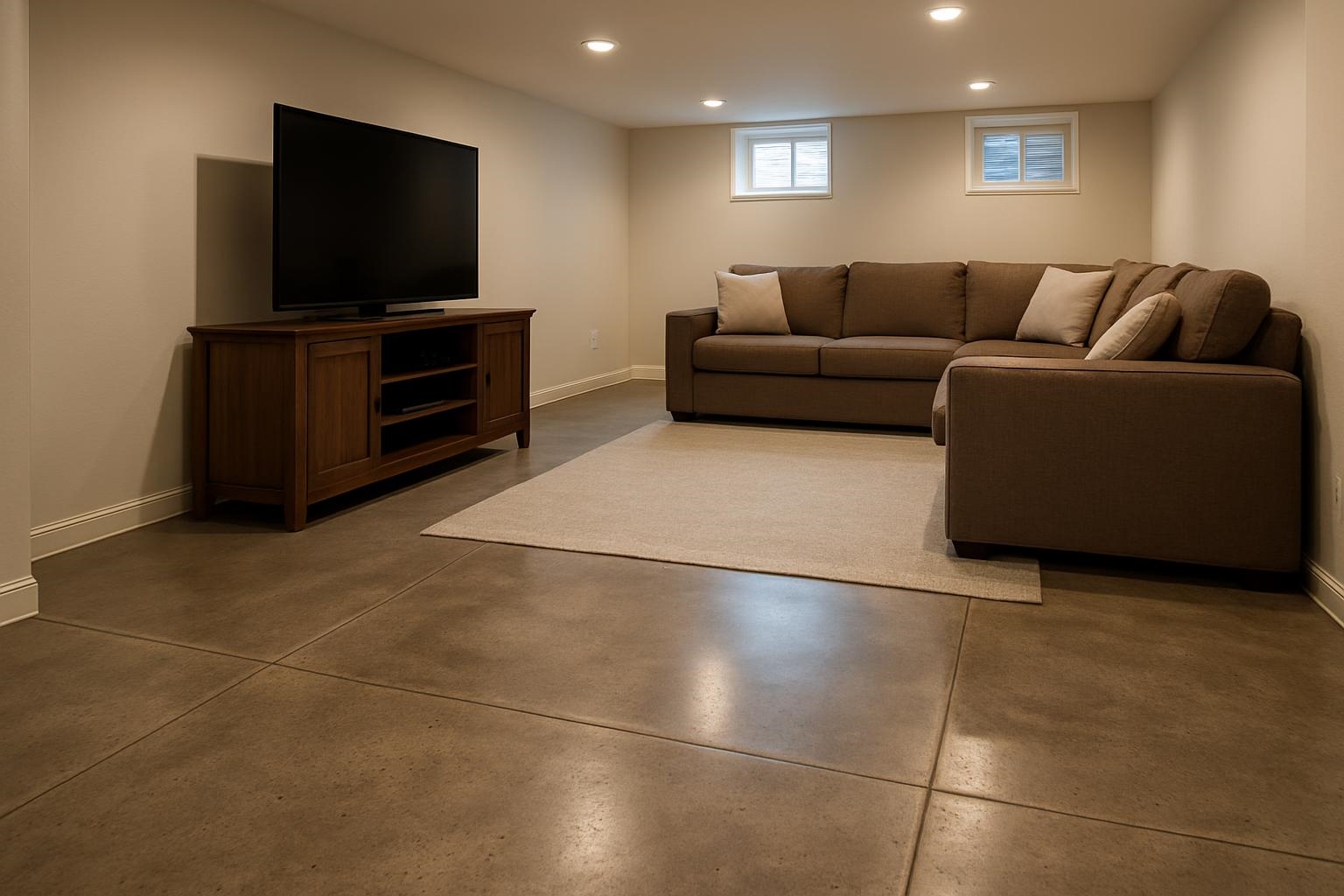
Decorative concrete in residential basement

Residential flooring contractor

Residential Flooring Systems

Decorative epoxy, polished overlays, tile, and performance flooring for garages, basements, and refined residential interiors.

Residential specialty flooring often blends polished overlay systems, tile and stone installation, and selected decorative resinous flooring based on slab condition and finish goals. Compare related project work and service options.

Flooring Strategy

Residential Flooring Systems In New Jersey, Greater Philadelphia, And The Northeast

Residential performance flooring has to look sharp and live well. Showcase Finishing Systems installs decorative and high-durability floor systems for garages, lower levels, utility areas, and custom residential interiors where owners want a clean finish that is easier to maintain over time.

We guide homeowners and builders through finish selection, slip considerations, substrate prep needs, and the right balance between appearance and long-term durability.

Project Priorities

What Matters Most In This Environment

Finish Quality

Residential projects are judged at close range, so edge work, transitions, and visual consistency matter.

Stain Resistance

Garages, mudrooms, and utility spaces benefit from systems that hold up to spills, moisture, and daily wear.

Comfortable Maintenance

Owners want floors that are easier to clean and keep looking sharp over time.

Recommended Systems

Flooring Types We Commonly Recommend

Decorative epoxy and flake systems

A strong choice for garages and utility spaces that need a finished look plus resistance to stains and routine wear.

Self-leveling polished overlays

Useful when an existing slab needs visual improvement and a cleaner, more refined surface.

Tile and stone assemblies

Best for baths, entries, kitchens, and custom residential spaces where finish detail drives the design.

Material Recommendations

Suppliers And Materials That Fit This Work

Recommended supplier

Sherwin-Williams High Performance Floors

Recommended for residential epoxy and protective floor systems where appearance and durability both matter.

Recommended supplier

Mapei

A strong fit for tile, stone, setting materials, and substrate correction products in residential finish work.

Recommended supplier

Schluter Systems

Recommended for trim, shower, waterproofing, and transition detailing in high-quality residential tile assemblies.

Recommended supplier

CTS - Rapid Set TRU PC

Useful where a worn slab needs a polished topping or decorative refresh instead of full replacement.

Frequently Asked Questions

Questions About Residential Flooring Systems

What flooring concerns matter most in Residential environments?

Residential spaces should be evaluated for traffic, cleaning routines, moisture exposure, safety expectations, appearance standards, maintenance capacity, and downtime limits.

Which flooring systems are commonly considered for Residential projects?

Common options may include epoxy resinous flooring, urethane cement, polished concrete, self-leveling polished overlays, tile and stone, or decorative broadcast systems depending on the space.

How does substrate condition affect Residential flooring decisions?

Cracks, moisture, contamination, old coatings, weak concrete, and uneven surfaces can change the preparation scope and may determine whether repair, mitigation, overlay, or coating systems are viable.

When is epoxy resinous flooring a good fit for Residential spaces?

Epoxy resinous flooring can be a strong fit when the project needs durable protection, color control, cleanability, chemical resistance, texture options, or a more controlled finished surface.

When should urethane cement be considered for Residential spaces?

Urethane cement should be considered where moisture, thermal shock, washdowns, food-service exposure, or heavier service conditions demand a more tolerant resinous system.

When can polished concrete work well in Residential environments?

Polished concrete can work well when the existing slab is suitable and the goal is a durable, reflective, lower-maintenance concrete finish for visible or high-traffic spaces.

When are self-leveling polished overlays useful in Residential spaces?

Polishable overlays are useful when the project needs a polished-concrete appearance but the existing slab is not suitable for direct polishing or needs a more controlled topping.

When does tile or stone make sense for Residential projects?

Tile or stone can make sense when the design requires modular surfaces, wet-area detailing, wall coordination, hospitality-level appearance, or specific layout control.

How important is slip resistance in Residential flooring?

Slip resistance should be reviewed early because cleaning methods, moisture exposure, traffic type, footwear, and public access can all affect the correct texture and finish.

How do cleaning chemicals affect flooring choices in Residential spaces?

Cleaning chemistry can influence coating type, grout selection, topcoat performance, texture, and maintenance planning, especially in spaces cleaned frequently or aggressively.

Can Residential flooring be installed during renovation or phased work?

Many projects can be phased, but sequencing depends on access, demolition, surface preparation, cure time, odor limits, noise, and when the area must return to service.

What details are easy to miss in Residential flooring scopes?

Commonly missed details include floor drains, cove base, transitions, expansion joints, cracks, moisture, wall interfaces, equipment pads, thresholds, and traffic control during installation.

How should lifecycle cost be considered for Residential flooring?

Lifecycle cost should include preparation, installation, downtime, maintenance, repairability, cleaning labor, expected service life, and the cost of choosing a system that is underbuilt.

Can decorative flooring still perform in Residential spaces?

Yes, but the decorative finish needs to be paired with the right substrate preparation, system thickness, texture, topcoat, and maintenance plan for the environment.

What information should I gather before pricing a Residential flooring project?

Gather square footage, photos, current floor material, known slab issues, traffic type, cleaning process, moisture concerns, finish goals, schedule, and any plan drawings.

Do Residential projects require different maintenance plans by floor type?

Yes. Polished concrete, resinous flooring, tile, stone, and overlays each need different cleaning products, equipment, inspection routines, and repair expectations.

How do supplier systems influence Residential flooring outcomes?

Supplier systems influence cure time, durability, chemical resistance, gloss, texture, polishability, waterproofing, and long-term maintenance performance.

Can Showcase Finishing help compare multiple options for Residential spaces?

Yes. The team can compare likely system families against the existing conditions, performance goals, appearance expectations, budget, and project schedule.

What can make a Residential flooring project more complex?

Complexity can come from moisture, repairs, active operations, occupied spaces, heavy equipment, drains, multiple trades, limited access, tight cure windows, or strict finish expectations.

What is the next step for a Residential flooring scope?

Review the relevant service pages, gather site conditions, and contact Showcase Finishing with your goals so the system discussion can move into a practical scope.

Related Services

Build The Right System Around Your Space

Most residential projects involve more than one possible flooring path. We can help narrow the right system based on the slab condition, maintenance demands, traffic pattern, and finish standard the space needs.

Use the related service links below to keep moving. Each one leads into a deeper service page with more detail on system fit, process, and frequently asked questions, and you can jump to projects at any time if you want field examples instead of theory.