Restoration strategy
Correcting Worn Or Uneven Concrete
Overlays help create a more consistent finished surface when the existing slab is visually tired or no longer suitable for the desired end result.
We use analytics cookies to understand site performance and improve your experience. You can accept or decline analytics cookies. Learn more in our privacy policy.

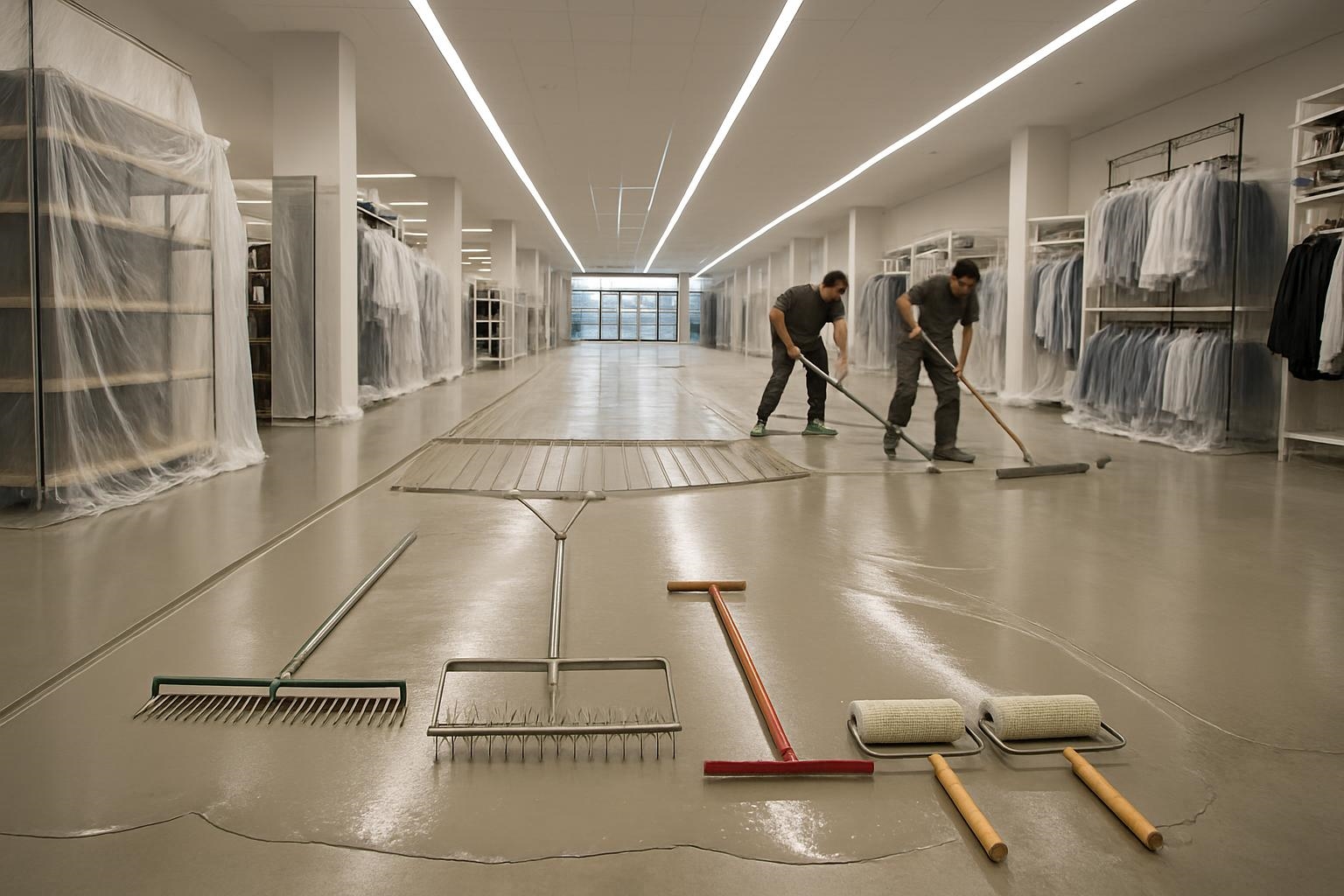
Polished overlay contractor
Overlay solutions for spaces that need a fresh finished surface without defaulting immediately to full slab replacement.
Self-leveling polished overlays are commonly evaluated for retail interiors, commercial spaces, and decorative residential floors when the slab needs correction before the final finish. Compare overlay-ready slabs with polished concrete services and related project work where self-leveling overlays solve worn-slab conditions.
Service Overview
Self-leveling polished overlay flooring is often the right move when the existing slab no longer supports the desired finish quality but the project still needs a more efficient path than full removal and replacement. Self-leveling overlays can restore surface quality, improve appearance, and create a more consistent finished floor.
Showcase Finishing Systems installs self-leveling polished overlay systems for commercial interiors, selected residential spaces, showrooms, public spaces, and renovation projects where the substrate needs correction before it can become the final floor.
These projects are usually strongest when the team is trying to save schedule, avoid full slab replacement, and still deliver a floor that reads intentional instead of patched together.
Best Fit Environments
Restoration strategy
Overlays help create a more consistent finished surface when the existing slab is visually tired or no longer suitable for the desired end result.
Polish-ready surface
A self-leveling overlay can support a cleaner, more intentional finish in visible commercial, residential, and mixed-use interiors.
Renovation-friendly work
They can be a smart path when schedule, budget, or existing building constraints make full slab replacement less attractive.
System Paths
System options
Used to create a flatter, more refined base or finished surface depending on the system design.
System options
A good fit where the final floor should carry a more architectural polished-concrete character with a refreshed surface.
System options
Color and finish direction can be adjusted based on whether the space is operational, public-facing, or more design-driven.
Installation Process
Frequently Asked Questions
Self-leveling polished overlay flooring is typically chosen when a project needs surface correction, visual improvement, finish flexibility, and a more efficient restoration path in a space that cannot be treated like a basic finish-only floor replacement.
Self-leveling polished overlay flooring is commonly used in commercial interiors, selected residential spaces, renovation projects, showrooms, adaptive reuse spaces, and worn slabs that need a fresh finish path throughout New Jersey, Greater Philadelphia, and the Northeast.
Owners usually choose this system when they need surface correction, visual improvement, finish flexibility, and a more efficient restoration path without compromising the way the space has to operate every day.
Performance depends on substrate condition, overlay selection, traffic, and maintenance, but a well-installed overlay can provide a long service life in the right environment.
Timing depends on prep, substrate repairs, room size, cure requirements, and whether the overlay will also be polished or sealed as the final finish.
Downtime is usually less disruptive than full replacement, but cure times and finish sequencing still need to be planned carefully.
Preparation usually includes mechanical profiling, repair work, crack treatment, moisture review, and primer selection before the overlay is placed.
It is specifically intended for existing substrates, but only when the slab condition and bond requirements support a successful overlay installation.
Slip performance depends on the final finish selected, the environment, and whether the surface is being designed as a polished or more textured system.
Maintenance is tied to the final finish path. Cleaners, traffic, and protective procedures should match whether the overlay is polished, sealed, or more decorative.
Yes. Overlays are often a strong fit in commercial interiors and selected residential spaces that need a refreshed slab appearance without full replacement.
Sometimes. It depends on the system selected and whether the environment demands a more industrial resinous approach instead.
Yes. Color, sheen, final protection, and whether the overlay is polished or sealed all affect the finished presentation.
The best comparison usually turns on traffic, substrate condition, maintenance goals, moisture exposure, finish expectations, and schedule. We compare those conditions directly so the decision is based on the job, not a generic material preference.
The right overlay system can handle substantial day-to-day use, but the specification still needs to match moisture, traffic, and operational exposure correctly.
Many overlay systems can be patched or repaired, but the repair approach depends on finish expectations and the specific product used.
Surface prep, thickness, repairs, finish quality, color treatment, polishing, room access, and schedule all affect overlay pricing.
This is often chosen specifically when the slab needs visual and functional improvement but full concrete replacement is not the preferred path.
The fastest path is to share the space type, square footage, substrate condition, schedule, and desired finish. That lets us recommend the right system and scope the estimate more accurately for projects in New Jersey, Greater Philadelphia, and the Northeast.
We use overlays where they make strategic sense, with realistic substrate evaluation and finish planning instead of forcing the same answer onto every slab.
Next Step
Every flooring scope works better when the system is selected around real traffic, substrate condition, maintenance demands, and schedule constraints. That is especially true on service pages like this one, where the wrong specification can look fine on paper but underperform in the field.
If you are comparing options, planning a renovation, or trying to determine whether repair, restoration, or replacement is the better path, keep moving through the site. Review related projects, compare industries similar to your facility, or return to the full services hub before you commit to the wrong system.
Detailed Service Pages
Use these focused pages when your project needs a more specific flooring system, finish, or installation detail.
Resurfacing options for worn, uneven, or visually inconsistent concrete that needs a new finished surface.
Leveling materials used to prepare floors for compatible finished flooring assemblies.
Topping systems that can be ground, honed, and polished to simulate or improve exposed concrete finishes.
Cement-based resurfacing systems selected for design, schedule, and substrate correction goals.
Thin decorative or corrective surface treatments used where compatible with the project conditions.
Preparation work that addresses flatness, transitions, elevation changes, and finish compatibility.
Resurfacing systems used when renovation timing and return-to-service windows are critical.