

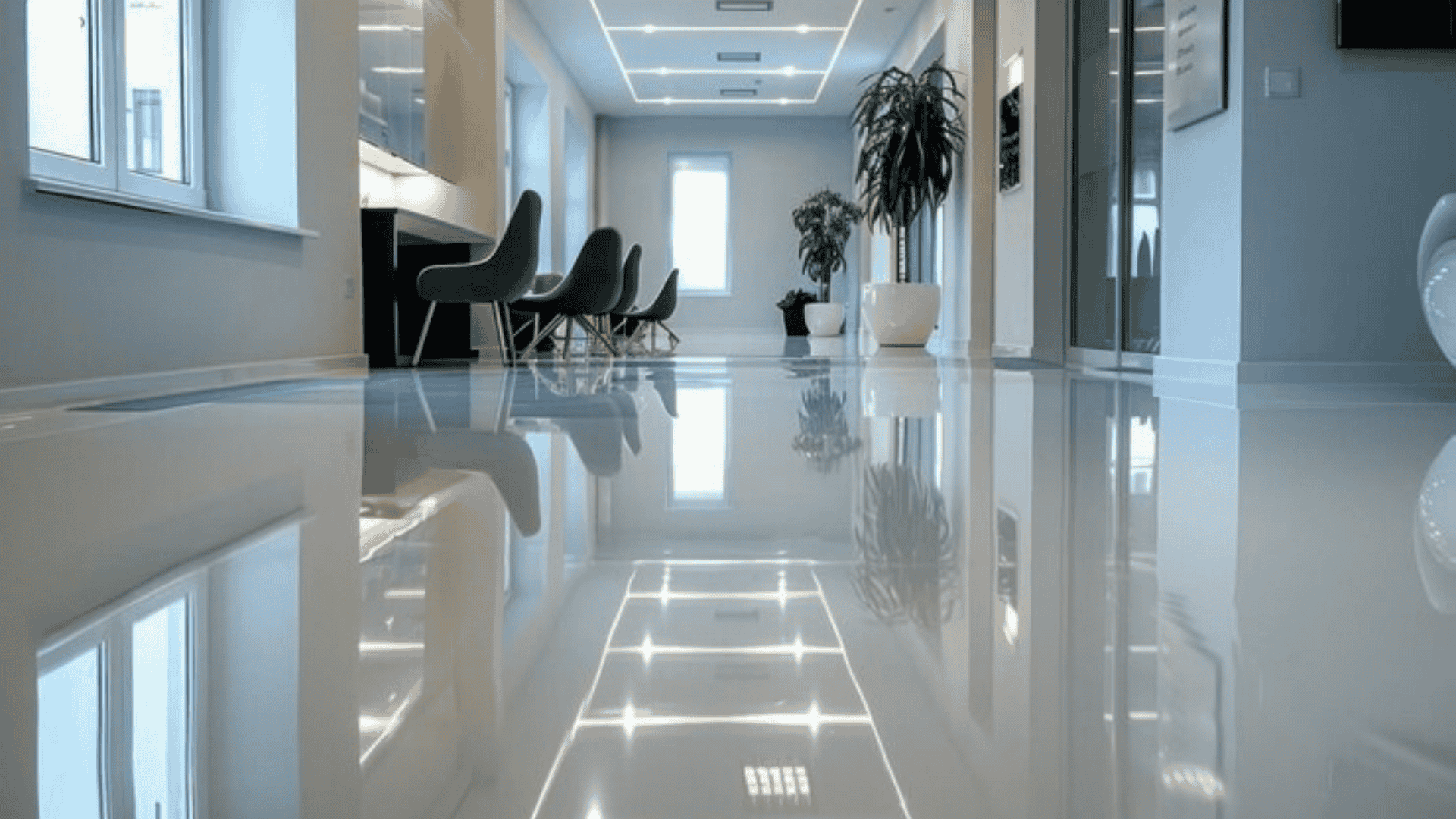
Self-Leveling Polished Overlays
Self-Leveling Underlayment
Self-Leveling Polished Overlays service for commercial, residential, and specialty flooring projects
Leveling materials used to prepare floors for compatible finished flooring assemblies.
Service Guidance
What self-leveling underlayment is used for.
What it is
Leveling materials used to prepare floors for compatible finished flooring assemblies.
Where it fits
Self-Leveling Underlayment may fit commercial, residential, industrial, institutional, hospitality, retail, education, or specialty spaces when the substrate and use conditions support it.
How Showcase scopes it
We review substrate condition, traffic, moisture exposure, cleaning expectations, finish goals, timing, and adjacent surfaces before recommending a system.
Benefits
Why this service may be the right fit.
- Clearer scope before installation
- Better substrate and finish coordination
- More predictable maintenance expectations
- Surface correction and long-term slab performance planning
Process
A practical installation conversation starts with the existing floor.
Fit Check
Good fit and not-a-fit signals.
Good fit
Self-Leveling Underlayment is worth exploring when the finish goal, expected traffic, cleaning routine, schedule, and substrate condition point toward a Self-Leveling Polished Overlays solution.
Needs caution
Moisture, weak concrete, movement, contamination, uneven transitions, or unrealistic shutdown windows can change the recommendation.
Related choices
Compare this service with the parent Self-Leveling Polished Overlays page and adjacent service pages before locking in a scope.
Helpful References
Educational resources for better flooring decisions.
These non-competitor resources can help explain standards, surface preparation, safety, or material-care considerations that influence self-leveling underlayment planning.
FAQ
Questions about self-leveling underlayment.
What is Self-Leveling Underlayment?
Leveling materials used to prepare floors for compatible finished flooring assemblies. Showcase reviews the existing surface, expected traffic, cleaning routine, and finished appearance before recommending a specific Self-Leveling Polished Overlays approach.
Where does Self-Leveling Underlayment work best?
Self-Leveling Underlayment works best when the use conditions match the system: traffic level, moisture exposure, cleaning frequency, design expectations, and return-to-service timing all matter.
Can Self-Leveling Underlayment be used in residential spaces?
Some Self-Leveling Underlayment projects are residential, especially garages, basements, kitchens, baths, entries, and specialty rooms. The right fit depends on slab condition, substrate movement, finish expectations, and maintenance goals.
Can Self-Leveling Underlayment be used in commercial spaces?
Yes, when the system is selected for the actual operating conditions. Commercial work usually needs more attention to shutdown windows, cleaning chemicals, traffic, safety, and lifecycle planning.
What should be checked before installing Self-Leveling Underlayment?
Substrate soundness, moisture, cracks, contamination, elevation changes, transitions, and adjacent finishes should be reviewed before pricing or installation.
How does preparation affect Self-Leveling Underlayment?
Preparation is often the difference between a floor that performs and one that fails early. Grinding, profiling, patching, leveling, cleaning, and moisture review must match the selected system.
How long does Self-Leveling Underlayment take to install?
Schedule depends on area size, preparation needs, material cure time, detail work, and site access. Showcase scopes timing during the planning conversation instead of assuming every floor can follow the same schedule.
When can the floor return to service?
Return to service depends on the materials used, temperature, humidity, ventilation, traffic type, and whether the space needs light foot traffic or full operational use.
What can cause Self-Leveling Underlayment to fail?
Common failure risks include moisture vapor, weak concrete, insufficient surface profile, contamination, movement, poor detailing at transitions, wrong material selection, or rushing cure windows.
How is slip resistance handled?
Slip resistance is handled by matching texture to the environment. Wet spaces and active-use areas may need more traction, but the texture still has to remain cleanable and appropriate for the space.
What maintenance does Self-Leveling Underlayment need?
Maintenance depends on the finish. Most systems need compatible cleaners, routine soil removal, protection from harsh abuse, and periodic review of wear patterns or sealers.
How does Self-Leveling Underlayment compare with nearby service options?
The closest alternatives are usually other Self-Leveling Polished Overlays systems. Showcase compares appearance, thickness, cure time, durability, maintenance, substrate needs, and budget before recommending one path.
Is Self-Leveling Underlayment good for renovation work?
It can be, especially when the existing surface can be prepared correctly. Renovation projects need extra attention to demolition limits, height transitions, dust control, access, and shutdown timing.
Can Self-Leveling Underlayment improve appearance and performance at the same time?
Yes, but the priority has to be clear. Some projects emphasize cleanability and durability first, while others also need color, aggregate exposure, pattern, gloss, or premium detail work.
Does Self-Leveling Underlayment require moisture testing?
Moisture review is recommended whenever concrete or moisture-sensitive assemblies are involved. The need for formal testing depends on the system, substrate, and project risk.
What information helps Showcase scope Self-Leveling Underlayment?
Photos, dimensions, current floor type, known problems, use of the space, cleaning methods, timing constraints, and desired finish all help the team narrow the right recommendation.
Can Self-Leveling Underlayment be financed?
Financing may be available for eligible projects. The financing page explains the current pre-qualification option and how to compare scope, timing, and payment planning.
Should I choose Self-Leveling Underlayment before a site review?
Use this page as a starting point, not a final specification. A site review helps confirm whether the system fits the substrate, use conditions, and finished look.
What areas does Showcase serve for Self-Leveling Underlayment?
Showcase serves projects across South Jersey, Greater Philadelphia, Cherry Hill market areas, and surrounding Northeast project locations depending on scope and schedule.
What is the next step for Self-Leveling Underlayment?
Start with a conversation about the surface, use conditions, desired finish, schedule, and budget. From there, Showcase can recommend whether Self-Leveling Underlayment or a related service is the best fit.
Ready to Scope It?
Talk with Showcase about self-leveling underlayment.
Send photos, dimensions, timing, and the current floor condition so we can help compare the best service path.