Operational Durability
The floor needs to stand up to carts, pallets, lifts, equipment, and repeated maintenance activity.
We use analytics cookies to understand site performance and improve your experience. You can accept or decline analytics cookies. Learn more in our privacy policy.
Industrial flooring contractor
Heavy-duty flooring systems for production, warehouse, logistics, maintenance, and manufacturing environments.
Industrial spaces often rely on commercial epoxy flooring systems, selected overlay solutions, and durable concrete finishes depending on traffic, impact, and maintenance needs. Review industrial-adjacent project work for examples in warehouse flooring and service-bay environments.
Flooring Strategy
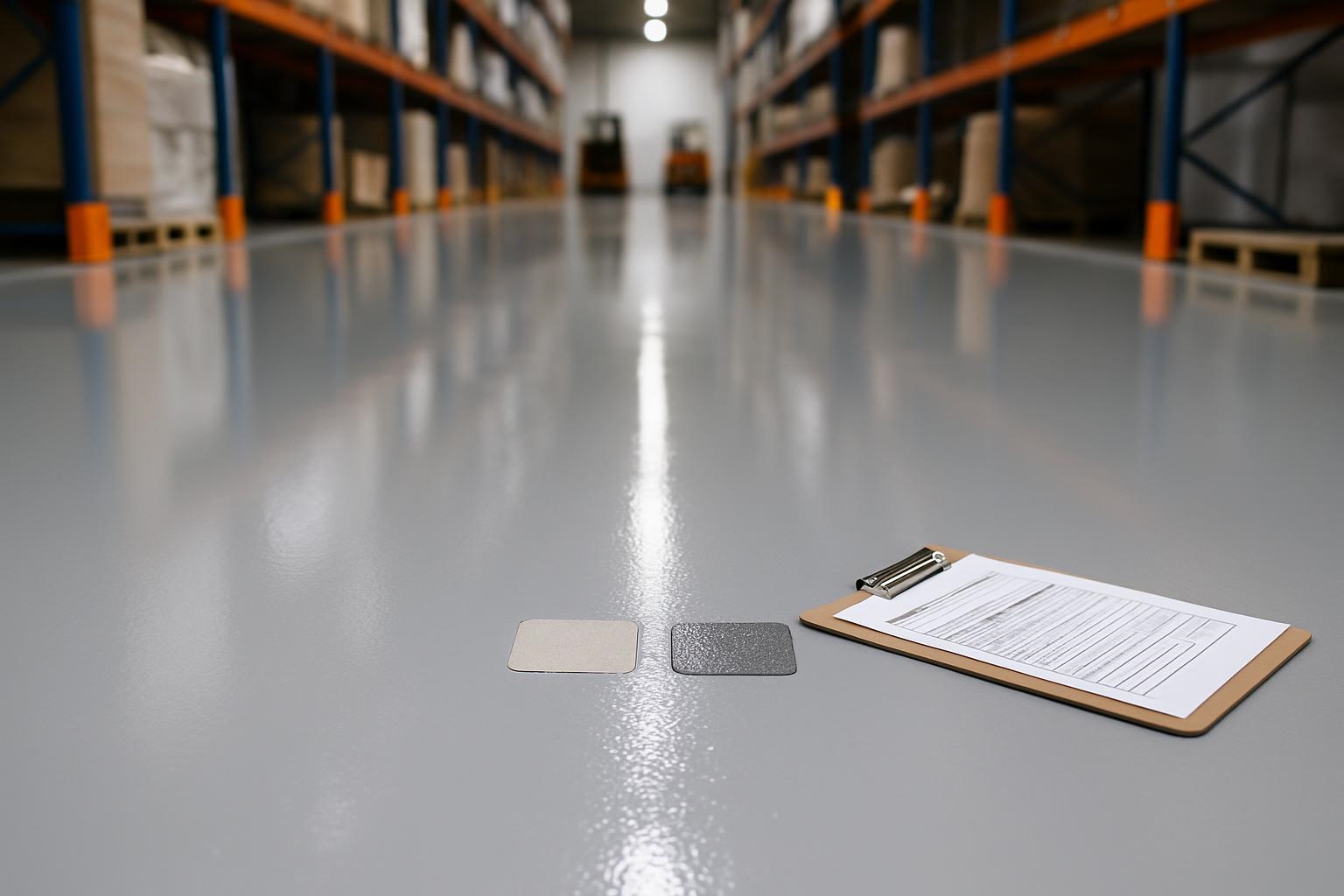
Industrial flooring has to perform under forklifts, point loads, production traffic, cleaning cycles, and continuous daily use. Showcase Finishing Systems installs industrial floor systems that are selected around abrasion, chemical exposure, maintenance goals, and the realities of active facilities.
From warehouses and manufacturing rooms to maintenance shops and logistics spaces, we help teams weigh resinous systems, urethane cement, polished concrete, toppings, and concrete restoration paths that make sense operationally.
In warehouse flooring and service-bay work especially, the better decision usually comes from understanding rolling loads, impact points, patch history, and shutdown limits before anyone starts talking about finish color.
Project Priorities
The floor needs to stand up to carts, pallets, lifts, equipment, and repeated maintenance activity.
Many industrial spaces need systems that handle spills, washdown, and more aggressive exposure conditions.
Installation strategy matters when production windows are tight or facility downtime is expensive.
Recommended Systems
A strong fit for warehouses, production spaces, and service areas where durability and coating build are essential.
Useful in harsher industrial conditions where thermal shock, washdown, and more aggressive wear are part of the environment.
Helpful where slabs need repair, resurfacing, or a cleaner working finish before final occupancy or continued use.
Material Recommendations

Recommended for industrial epoxy and high-performance resinous systems where wear, build, and service life are top concerns.
A strong choice for urethane cement and more demanding industrial environments exposed to washdown and heavier use.

Useful for concrete renewal, topping, and repair-driven industrial slab upgrades.
Helpful where industrial floors need patching, prep, or adjacent tile and setting materials in support spaces.
Frequently Asked Questions
Industrial Flooring Systems projects usually need the floor system to respond to the way that environment operates, including traffic, cleaning routines, moisture exposure, safety expectations, finish standards, and maintenance pressure.
Spaces in this category usually have their own traffic patterns, cleaning requirements, finish standards, schedule pressures, and performance risks.
The services most often worth reviewing for this type of environment are Epoxy Resinous, Polished Concrete, Self-Leveling Overlays.
If your building use, maintenance needs, traffic pattern, and operating conditions look similar to this page, it is the right starting point before comparing service options.
Yes. It is meant to narrow the field before you move into the more technical service pages.
No. Even within the same building category, the right system changes with substrate condition, finish expectations, moisture exposure, maintenance, and traffic.
Because the building type alone does not decide the floor. The related service pages help you compare whether this project points more toward epoxy, polished concrete, tile, overlays, or another option.
Yes. It helps frame whether restoration, overlays, resinous systems, polished concrete, tile, or another approach should be evaluated first.
Open one or two related service pages, review project examples if available, and then call with your building conditions and finish goals.
Material recommendation sections help reinforce which supplier families and system types often align with this kind of environment.
Yes. They add trust and help communicate that the recommendations are tied to real established material partners.
Yes. This page is written to help owners, facility teams, architects, and contractors ask better questions before a quote conversation.
It gives the environmental context first, which makes the technical service comparison much more useful. Once the space type is clear, the right flooring path is usually easier to evaluate with fewer wrong turns.
Use the related service links to compare the actual floor systems that fit that environment, then review project examples if you want to validate finish direction before pricing the work.
Yes. Choosing the wrong system can create avoidable cleaning, wear, moisture, or durability problems, which is why these pages focus on fit instead of generic material hype.
No. It helps with environmental fit, while the service pages provide deeper details on system options, process, and offering-specific questions.
Yes. Many projects include several room conditions, so this page can be used alongside other industry and service pages to compare the options that make the most sense.
Because the industry page is only the starting point. The next links help you confirm the right option with more technical detail and real project examples.
Yes. It can help shape early conversations around finish type, performance expectations, and likely service-path decisions.
Call the team after reviewing this page and the most relevant service page, then share the building type, substrate condition, schedule, and finish goal.
Related Services
Most industrial projects involve more than one possible flooring path. We can help narrow the right system based on the slab condition, maintenance demands, traffic pattern, and finish standard the space needs.
Use the related service links below to keep moving. Each one leads into a deeper service page with more detail on system fit, process, and frequently asked questions, and you can jump to projects at any time if you want field examples instead of theory.