Training use
Gyms, Weight Rooms, And Fitness Spaces
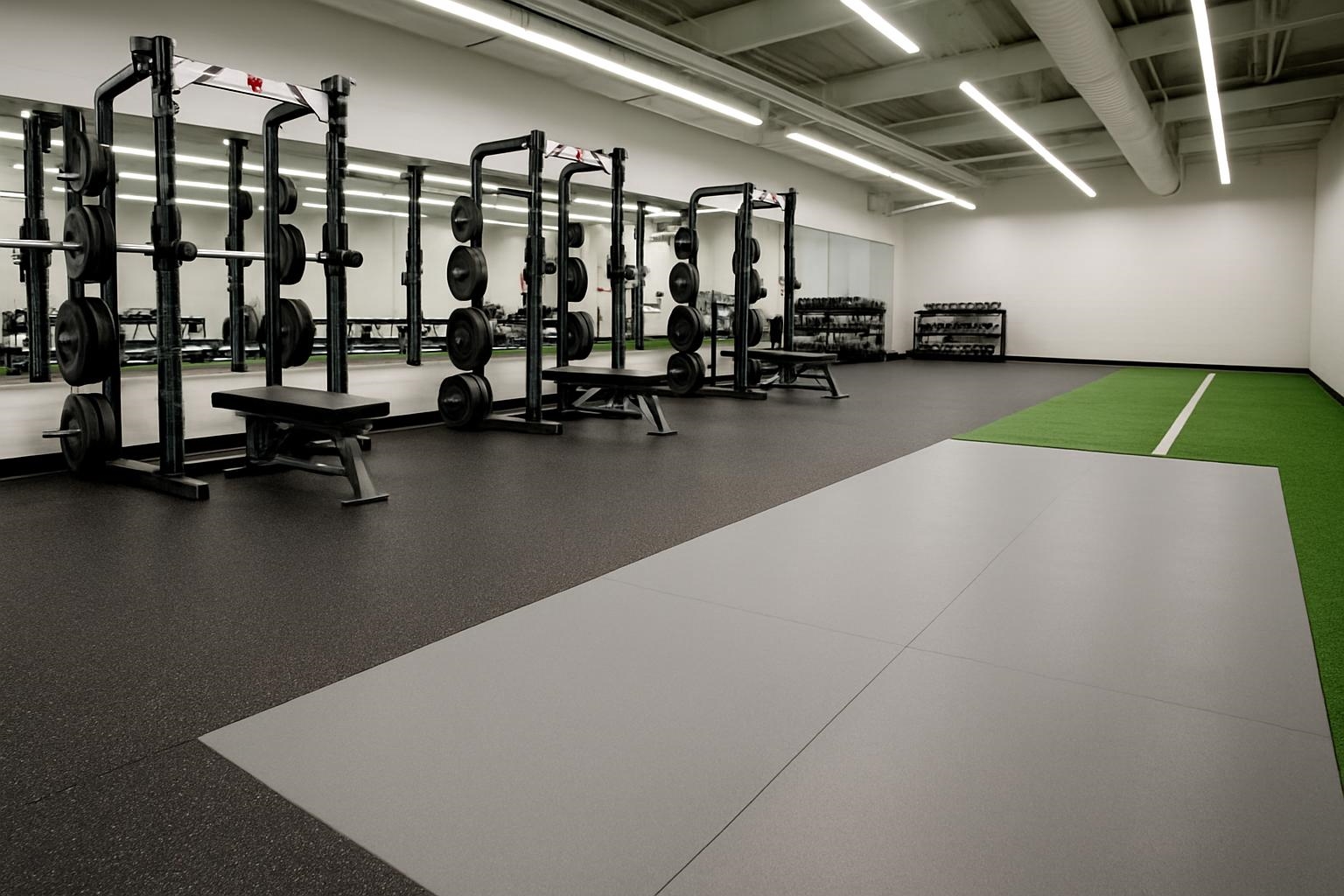
Athletic flooring is often selected to improve impact handling, traction, durability, and daily cleanability in active environments where gym flooring has to hold up under constant use.
We use analytics cookies to understand site performance and improve your experience. You can accept or decline analytics cookies. Learn more in our privacy policy.

Athletic flooring contractor
Athletic flooring systems planned around safety, impact control, cleanability, durability, and the way the space is actually used.
Athletic flooring supports training rooms, wellness spaces, recreation areas, and active-use environments that need performance underfoot. For adjacent support areas, compare polished concrete or resinous flooring systems, and review project examples for fit and finish.
Service Overview
Sport and athletic flooring is rarely one-size-fits-all. A surface used for free weights, training circuits, physical therapy, or recreation needs to perform differently based on impact, maintenance, traction, and the activity profile of the room.
Showcase Finishing Systems installs sport and athletic flooring for training environments, wellness spaces, residential fitness areas, multi-use activity rooms, and specialty interior programs across New Jersey, Greater Philadelphia, and the Northeast.
For schools, training centers, commercial wellness spaces, and residential fitness areas, that means looking past generic gym flooring and matching the surface to the actual program, equipment load, cleaning routine, and user experience.
Best Fit Environments
Training use
Athletic flooring is often selected to improve impact handling, traction, durability, and daily cleanability in active environments where gym flooring has to hold up under constant use.
Specialty programs
Some spaces need a more controlled underfoot feel, quieter performance, or a finish matched to rehabilitation and wellness activity.
Flexible facilities
Multi-use environments often need a flooring system that balances durability with broad usability across different programs.
System Paths
Surface types
Commonly used where durability, traction, and impact tolerance are all important to the finished room.
Surface types
A strong fit for facilities that need conditioning, sled, or training-lane functions built into the floor plan.
Surface types
Some athletic environments need additional cushioning, moisture tolerance, or room-specific protective performance.
Installation Process
Frequently Asked Questions
Sport and athletic flooring is typically chosen when a project needs safety, durability, traction, impact support, and a better fit for activity-specific use in a space that cannot be treated like a basic finish-only floor replacement.
Sport and athletic flooring is commonly used in fitness spaces, training rooms, wellness facilities, residential fitness areas, therapy environments, recreation rooms, and active-use interior programs throughout New Jersey, Greater Philadelphia, and the Northeast.
Owners usually choose this system when they need safety, durability, traction, impact support, and a better fit for activity-specific use without compromising the way the space has to operate every day.
Life span depends on the flooring type, traffic volume, equipment load, maintenance, and whether the room use matches the surface selected.
Installation time depends on substrate prep, room size, athletic surface type, seam work, and whether the project includes striping or specialty zones.
Downtime varies by product type and substrate needs, but sequencing can often be planned around room access and occupancy requirements.
Preparation can include moisture review, patching, flattening, adhesive prep, and transition detailing before the athletic surface is installed.
Sometimes, but many athletic surfaces perform best when installed over a properly prepared substrate rather than over an unknown finish layer.
Yes, traction is one of the main reasons athletic flooring is selected, but the right amount of grip depends on the program and the type of activity in the room.
Maintenance depends on the product, but in general it focuses on regular cleaning, protecting seams and edges, and avoiding damage from improper equipment or harsh chemicals.
Yes. Athletic flooring is a strong fit for many commercial, institutional, wellness, and residential fitness spaces.
Usually not as a general industrial floor, unless the room is specifically built for training, wellness, or activity use within an industrial setting.
Yes. Color, layout, zone markings, turf lanes, and room-specific transitions can all be customized.
The best comparison usually turns on traffic, substrate condition, maintenance goals, moisture exposure, finish expectations, and schedule. We compare those conditions directly so the decision is based on the job, not a generic material preference.
Athletic flooring can be selected around impact, traction, moisture, and cleaning needs, but the product must match the use of the room to perform correctly.
Many athletic systems can be repaired or replaced in sections, though the exact approach depends on the product type, age, and seam condition.
Product type, substrate prep, seam complexity, custom markings, room layout, transitions, and installation phasing all affect athletic flooring cost.
It is the right move when a space needs a program-specific surface rather than a generic finish that was never meant for active use.
The fastest path is to share the space type, square footage, substrate condition, schedule, and desired finish. That lets us recommend the right system and scope the estimate more accurately for projects in New Jersey, Greater Philadelphia, and the Northeast.
We focus on how the room actually performs, which leads to smarter athletic flooring recommendations and cleaner installation decisions.
Next Step
Every flooring scope works better when the system is selected around real traffic, substrate condition, maintenance demands, and schedule constraints. That is especially true on service pages like this one, where the wrong specification can look fine on paper but underperform in the field.
If you are comparing options, planning a renovation, or trying to determine whether repair, restoration, or replacement is the better path, keep moving through the site. Review related projects, compare industries similar to your facility, or return to the full services hub before you commit to the wrong system.
Detailed Service Pages
Use these focused pages when your project needs a more specific flooring system, finish, or installation detail.
Flooring systems for fitness, training, recreation, and multipurpose activity spaces.
Rubber surfaces for weight rooms, wellness areas, training rooms, and impact-sensitive spaces.
Athletic surfaces selected around use type, traction, maintenance, and durability.
Layout and marking coordination for sport, recreation, training, and activity spaces.
Flooring options selected when comfort, impact absorption, and underfoot performance matter.
Safety-focused surface selections for activity areas, transitions, and specialty-use environments.
Texture and traction planning for active-use spaces where safety and cleanability both matter.