
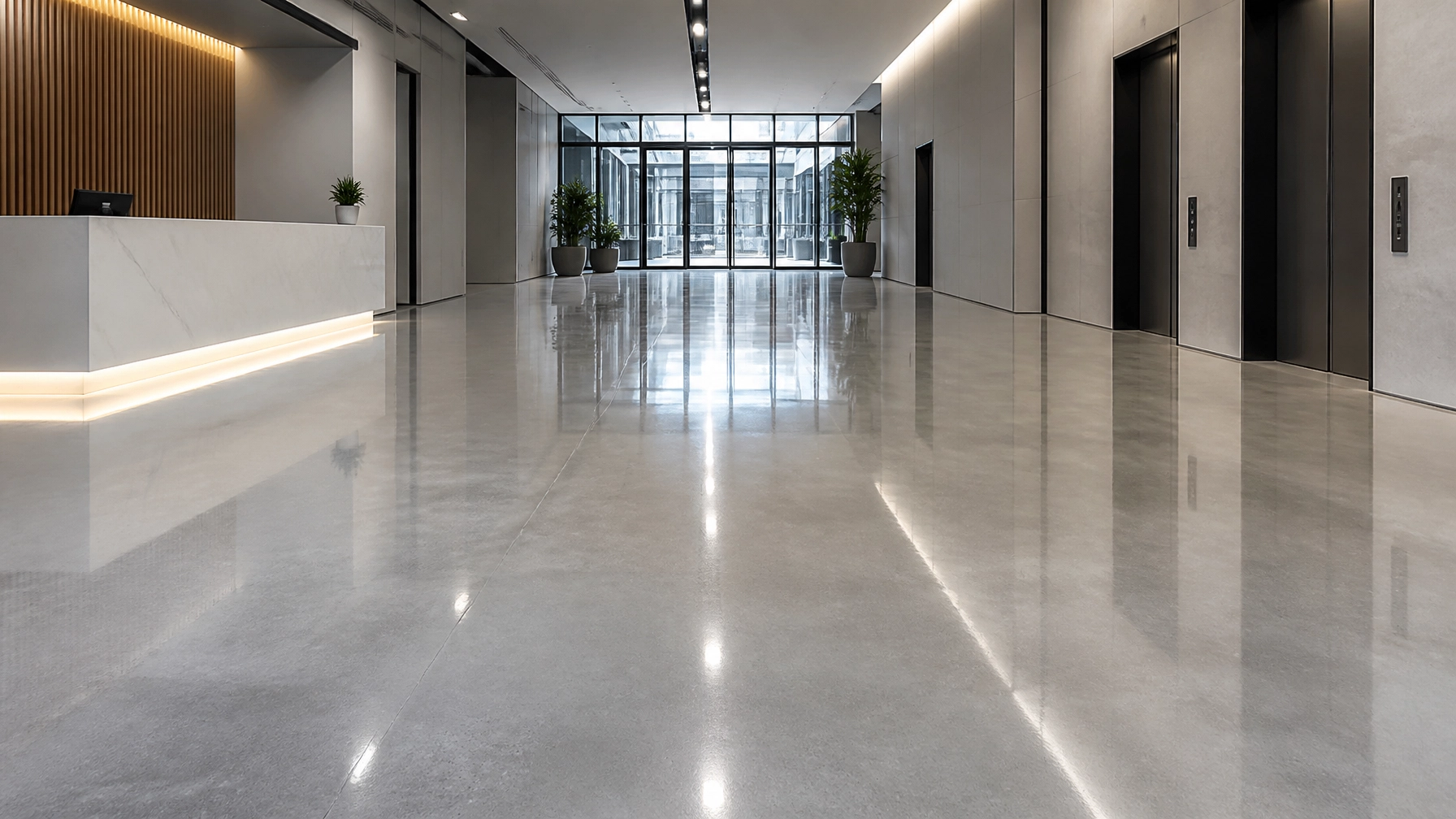
When property owners, facility managers, and architects evaluate high-performance flooring options, one question consistently surfaces near the top of the technical review: Does polished concrete stain?
It is a fair and critical inquiry. After investing in a seamless, high-end architectural finish for a residential upgrade, a commercial retail space, or an educational facility, nobody wants to watch a dropped cup of coffee or an accidental solvent spill ruin the slab on day one. At Showcase Finishing Systems, we believe in technical honesty before a single diamond pad touches your concrete. The short answer is nuanced: polished concrete is highly stain-resistant, but it is not completely stain-proof.
Understanding how the mechanical polishing process transforms a porous cementitious substrate into a dense, tightly bound surface is essential for setting realistic performance expectations after turnover. Let’s examine how densification works, what substances pose a genuine threat, and how proper maintenance protocols protect your investment over its entire lifecycle.
The Science of the Finish: Why Polished Concrete Resists Staining
Raw concrete is inherently porous. Left untreated, a standard concrete slab acts like a hard sponge, readily absorbing moisture, oils, and chemical spills into its open capillaries. When we execute a professional concrete polishing project, our objective is to radically alter that physical structure through mechanical refinement and chemical densification.
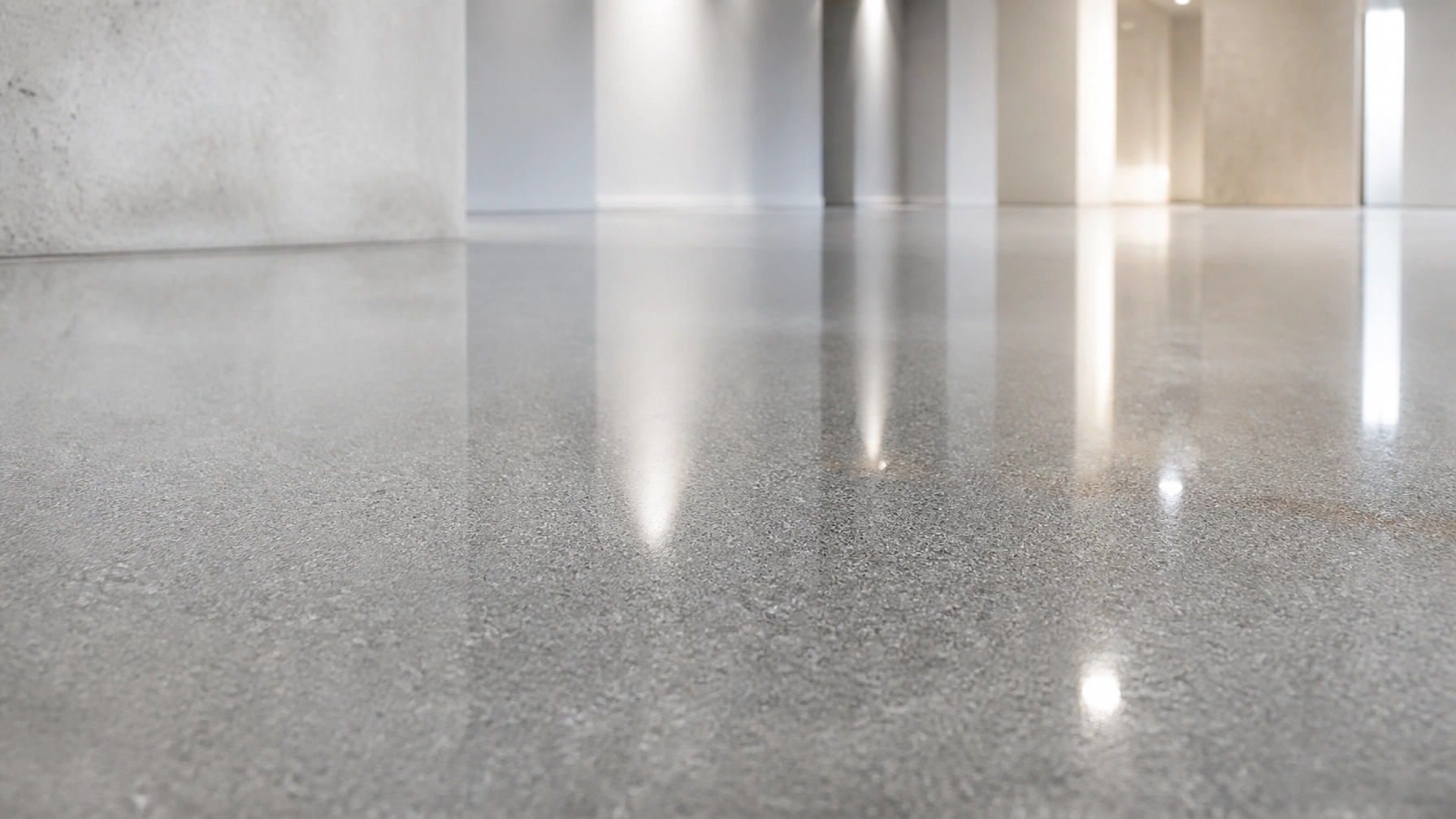
The process involves progressive grinding using finer diamond abrasives, paired with liquid chemical densifiers, typically lithium, sodium, or potassium silicates. These densifiers penetrate the concrete matrix and react chemically with free calcium hydroxide. This reaction creates insoluble calcium silicate hydrate crystals that fill the microscopic pores and harden the surface from within.
[Raw Porous Concrete] ➔ [Mechanical Grinding] ➔ [Chemical Densification] ➔ [Tightly Sealed Matrix]
Once honed to a high-grit finish and treated with a breathable impregnating guard, the concrete no longer has open pores for liquids to settle into. This creates a formidable barrier against everyday foot traffic, water, and routine spills. If you are comparing this system to other architectural alternatives, our guide on how to choose the best polished concrete floors breaks down how these structural characteristics stack up across different operational environments.
What Can Stain Polished Concrete?
While the densified matrix effectively blocks most liquids, certain substances can compromise the surface if left unaddressed. To maintain long-term integrity, facility stakeholders must understand the distinction between a simple surface spill and aggressive chemical degradation.
- Oils and Petroleum Products: Automotive fluids, hydraulic oils, and cooking fats can penetrate the concrete if they sit for extended periods, leaving dark discoloration.
- Acids and Highly Alkaline Agents: Vinegar, citrus juices, wine, harsh commercial cleaners, and certain industrial chemicals do not necessarily "stain" in the traditional sense; instead, they etch the concrete. Acids chemically dissolve the calcium carbonate bond at the surface, dulling the sheen and creating a rough patch where dirt can accumulate.
- Organic Dyes and Standing Liquids: Coffee, mustard, and pet urine left to puddle overnight can sometimes leave a faint chromatic trace if the topical guard has worn thin.
It is worth noting that these vulnerabilities are not unique to concrete; similar vigilance is required across many high-performance flooring systems, as outlined in our analysis of industrial epoxy floor coatings.
Diagnostic Evaluation: Assessing Your Environment Before Installation
Before selecting polished concrete for your space, conduct a diagnostic review of your operational exposure. Ask yourself these foundational questions:
- What is the primary activity in the space? Heavy commercial kitchens deal with oils and acids constantly, requiring specific protective protocols.
- What is the moisture vapor emission rate (MVER) of the slab? High sub-grade moisture can compromise densifiers and sealers from underneath.
- What is your routine maintenance capability? Are staff equipped to wipe up chemical or organic spills promptly?
- What is the expected foot traffic volume? High-traffic corridors require scheduled guard re-applications to maintain baseline stain repellency.
For a broader look at how durable systems integrate into demanding environments, review our overview of commercial flooring services.
Cleaning Protocols: The Key to Long-Term Protection
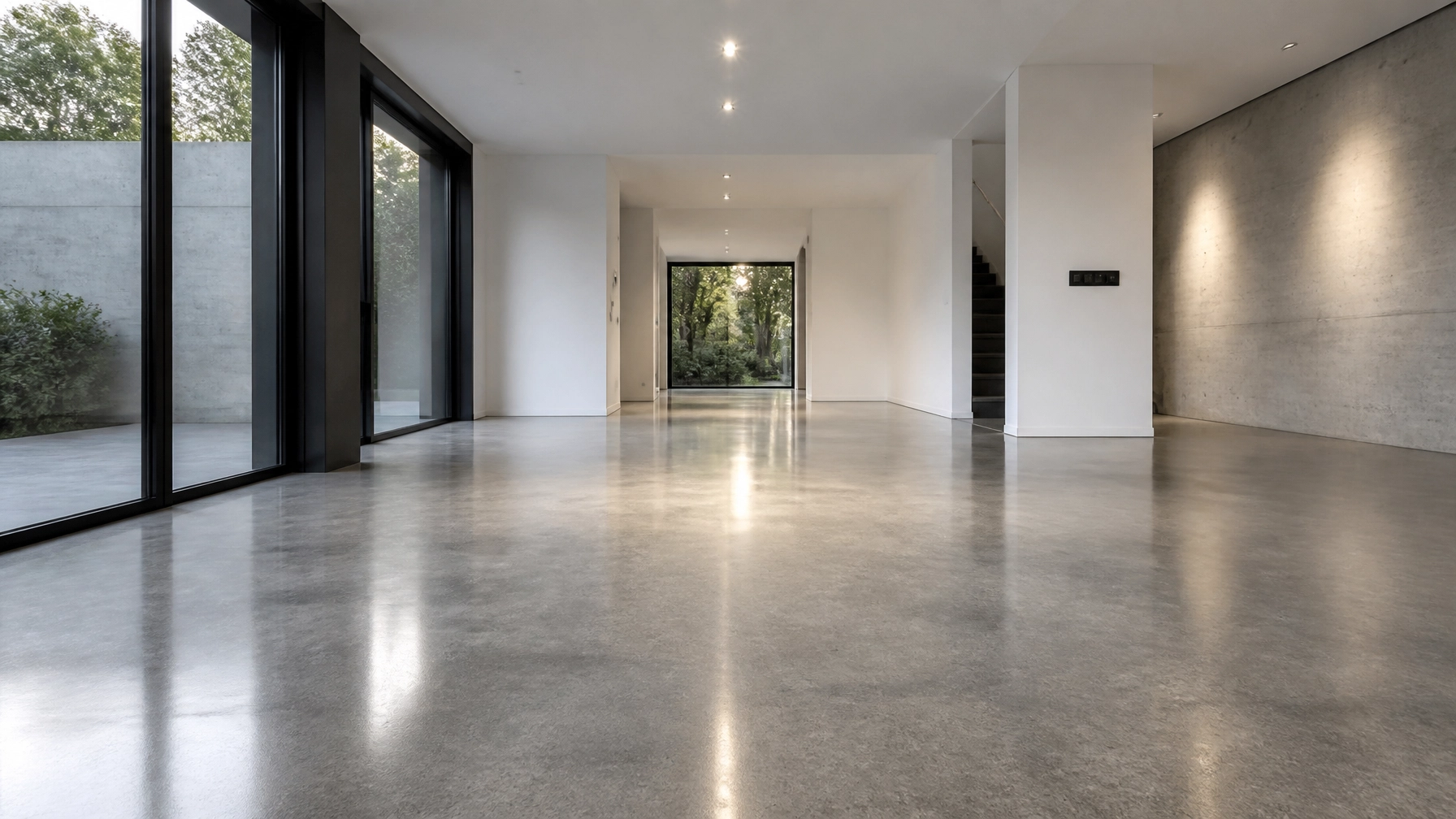
The difference between a floor that looks immaculate after a decade and one that degrades prematurely often comes down to daily housekeeping. Slow down to speed up your maintenance planning by adhering to these strict rules:
- Use pH-Neutral Cleaners: Never use multi-purpose household cleaners containing ammonia, bleach, or citrus extracts. These strip away the protective guard and etch the polished paste.
- Wipe Spills Promptly: Treat spills as immediate action items. A prompt sweep and mop with warm water and a neutral detergent prevent most substances from establishing a foothold.
- Deploy Walk-Off Mats: In high-traffic commercial and educational facilities, abrasive grit tracked in from outside acts like sandpaper, wearing down the polish and opening pathways for stains.
When Is a Topical Sealer or Guard Appropriate?
While standard polished concrete relies on internal densification and a breathable impregnating guard, certain high-risk environments benefit from additional topical coatings. If your facility handles heavy organic acids or aggressive solvents daily, we may recommend applying a specialized film-forming guard or transitioning to a resinous overlay.
However, for most architectural applications, maintaining the natural breathability of polished concrete provides the ideal balance of aesthetic clarity, slip resistance, and low lifecycle maintenance.
Conclusion: Intentionality Drives Longevity
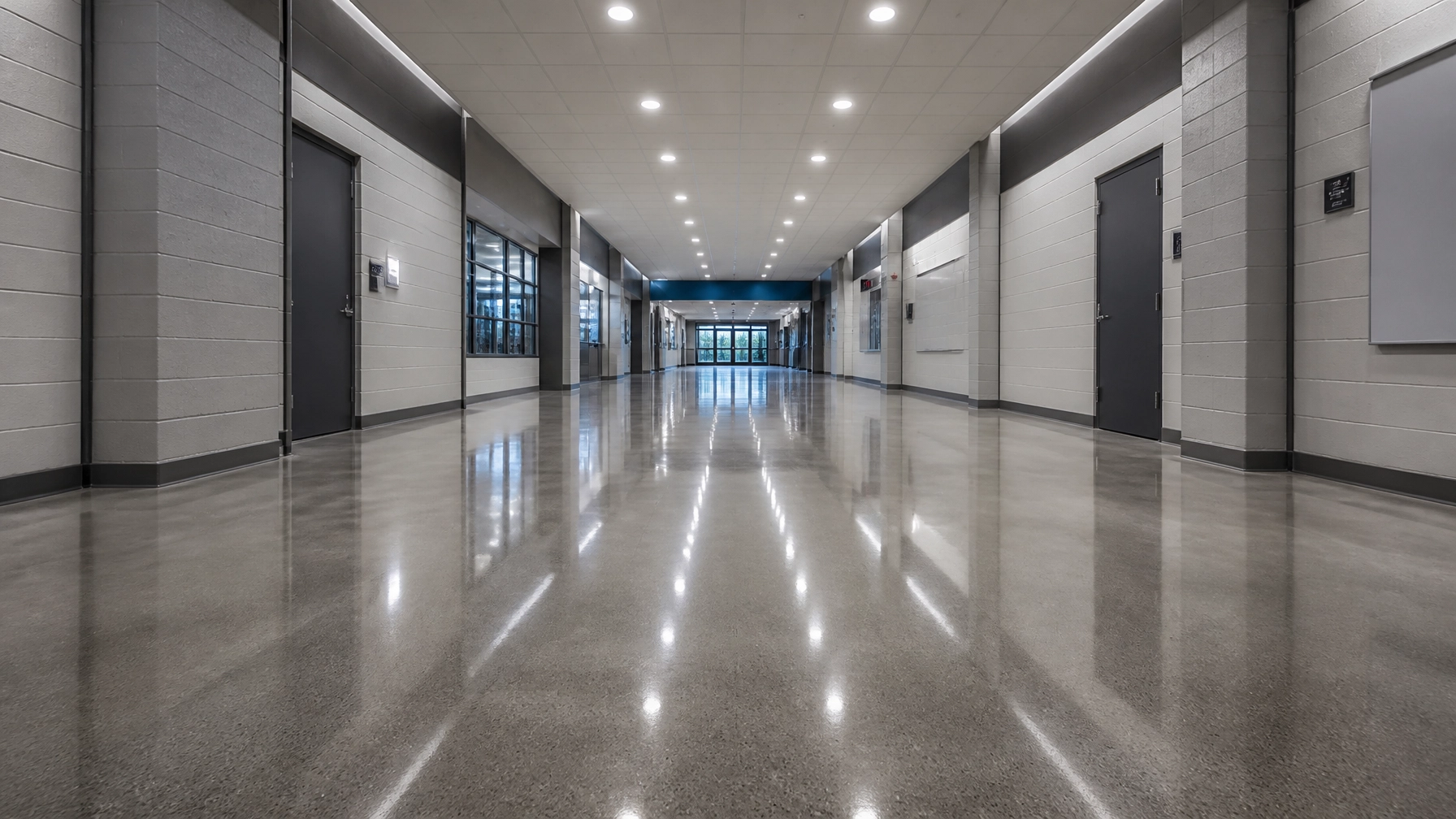
Does polished concrete stain? Yes, if neglected, exposed to harsh acids without cleanup, or left unsealed in heavy industrial chemical zones. But with proper installation by an experienced team, high-grade densification, and disciplined maintenance protocols, polished concrete remains one of the most durable, resilient, and visually stunning flooring systems available today.
At Showcase Finishing Systems, we partner with architects, business owners, and homeowners to evaluate site-specific conditions and engineer flooring solutions built to last. Contact our team today to discuss how polished concrete can elevate your next project.