
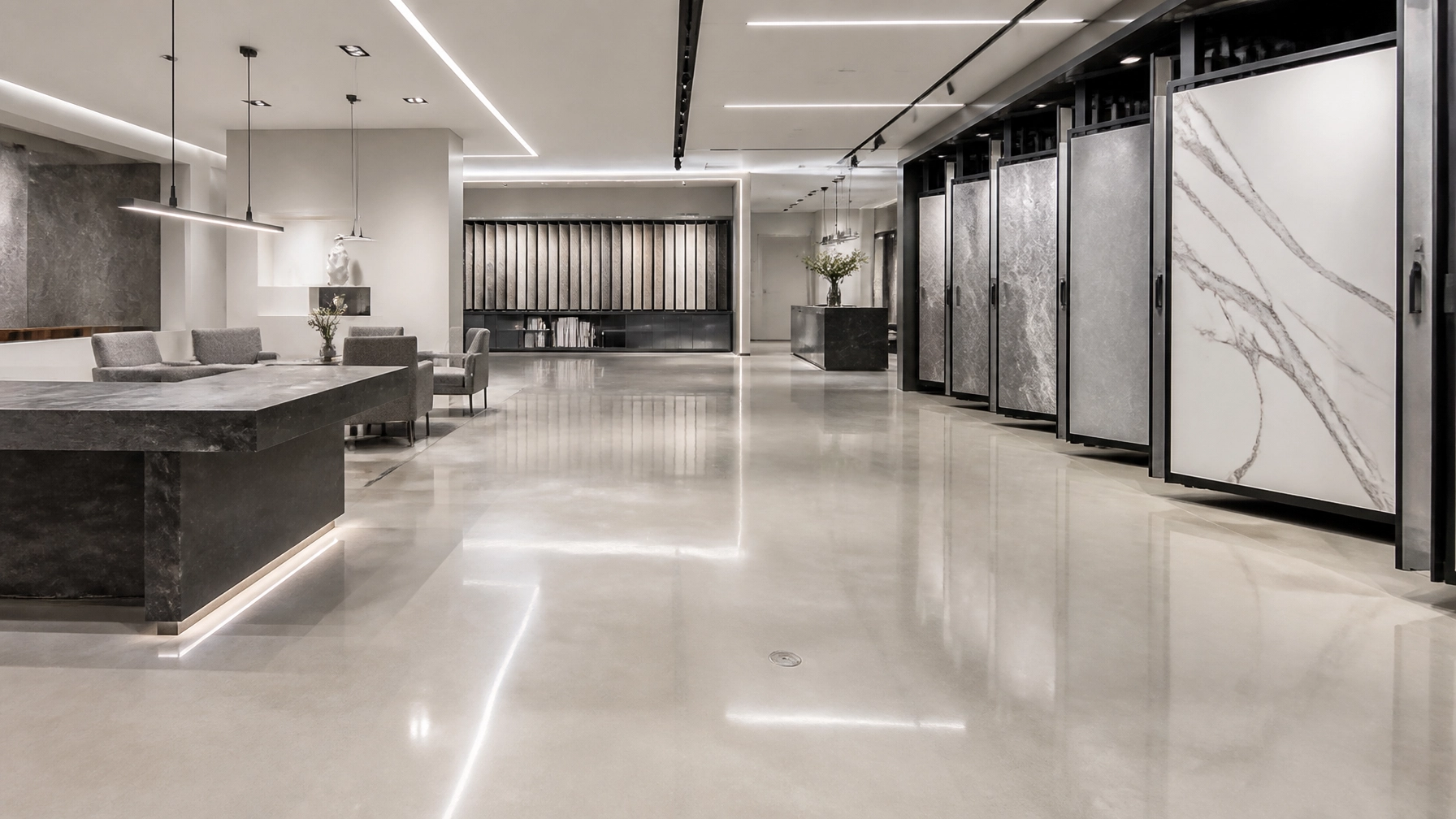
When evaluating flooring systems for a commercial facility, retail space, or custom residential property, selecting the right surface finish is a critical foundational decision. Too often, project stakeholders focus exclusively on initial aesthetics without analyzing how the slab’s physical characteristics dictate long-term performance. At Showcase Finishing Systems, we approach every installation through a diagnostic lens, emphasizing that the ideal polished concrete specification is determined by site-specific conditions, structural integrity, and operational demands rather than arbitrary design preferences.
Choosing the best polished concrete floor requires balancing two distinct variables: gloss level and aggregate exposure class. In this guide, we break down these technical parameters, examine the characteristics of a cream finish versus exposed aggregate, and compare polished concrete with alternative flooring systems to help you make an informed decision for your next project.
1. Decoding Gloss Levels: From Flat to High-Gloss
Industry standards categorize polished concrete by its surface reflectivity and the grit level used during the final refinement stages. Understanding these gloss levels helps facility managers and architects align visual expectations with maintenance realities.
- Level 1 (Flat / Ground): Typically finished below a 100-grit resin bond, this surface has a hazy, matte appearance with little to no light reflectivity. It is often chosen for industrial staging areas where slip resistance and utility outweigh aesthetics.
- Level 2 (Satin / Honed): Refined to approximately 400-grit, Level 2 provides a low-sheen, matte finish. It diffuses light gently and offers a sophisticated, understated look suitable for low-glare commercial environments.
- Level 3 (Polished / Semi-gloss): Reaching 800-grit or higher, this level produces clear light reflectivity with visible overhead reflections. It strikes a balanced chord between clean aesthetics and practical performance across mid-traffic commercial spaces.
- Level 4 (Highly Polished): Finished with 1500-to-3000-grit resin pads or burnishing, Level 4 yields a mirror-like sheen with sharp, distinct image clarity. This high-end finish is popular in architectural showrooms and modern corporate lobbies.
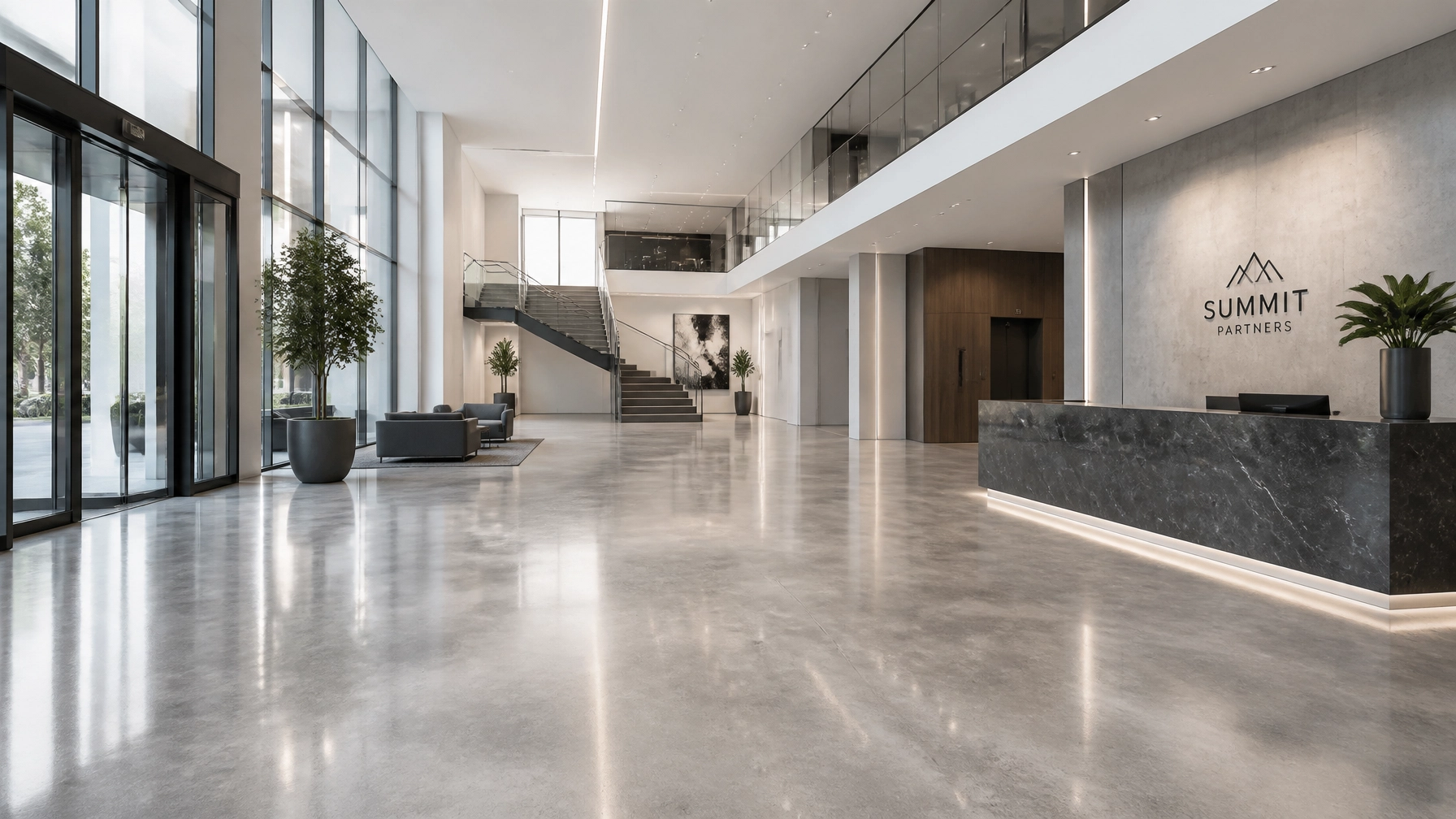
2. Understanding Aggregate Exposure Classes (A Through D)
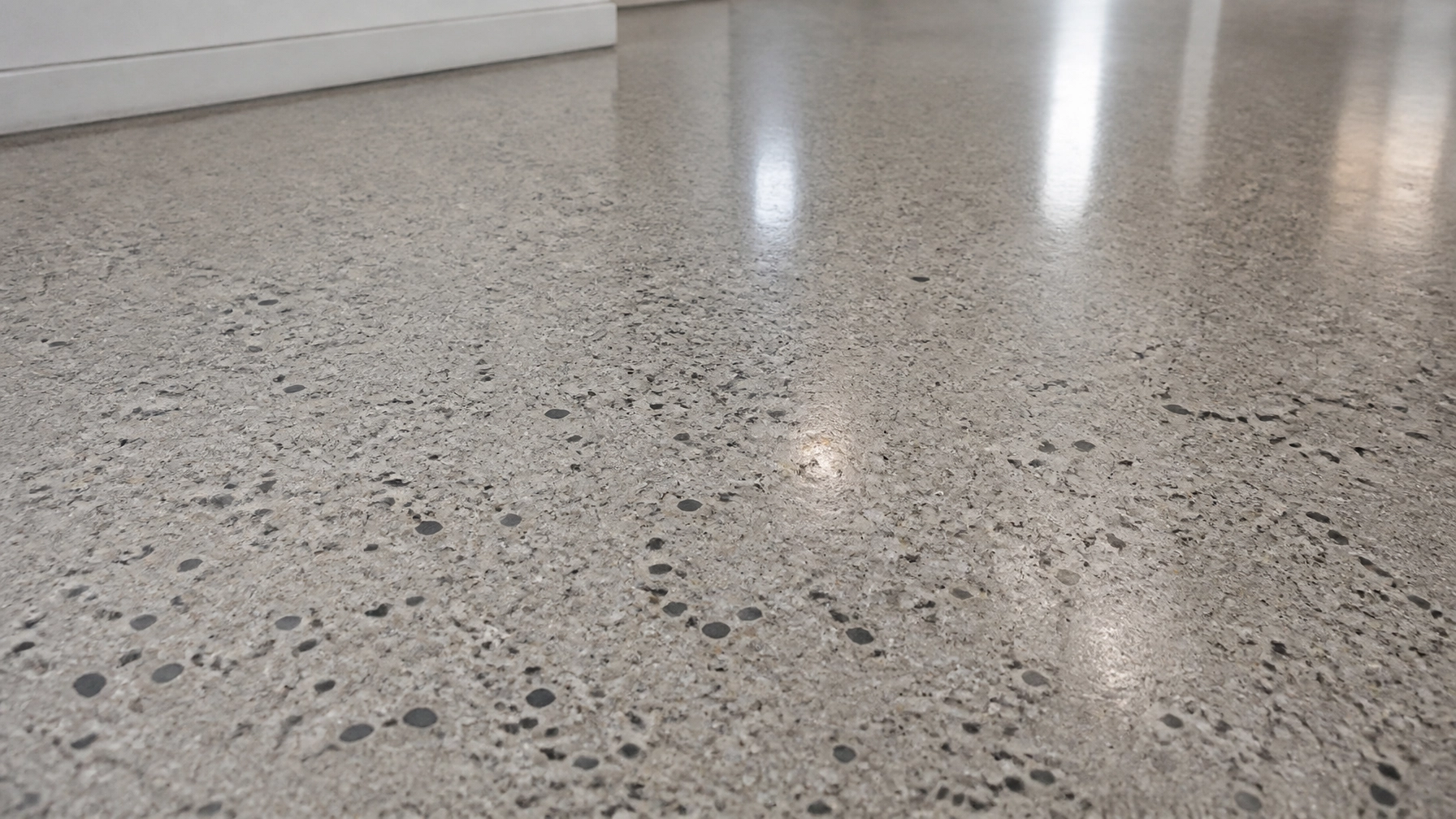
Beyond gloss, the depth of the mechanical cut determines how much of the underlying stone aggregate is exposed. This is classified from Class A to Class D.
| Class | Designation | Approximate Cut Depth | Visual Appearance |
|---|---|---|---|
| Class A | Cream Finish | Minimal / Surface only | Mostly cement paste and fines; little to no aggregate visible. |
| Class B | Salt-and-Pepper | ~1/16 inch | Fine sand exposed; subtle speckling across the floor. |
| Class C | Medium Aggregate | ~1/8 inch | Medium-sized stones visible, creating a balanced, textured pattern. |
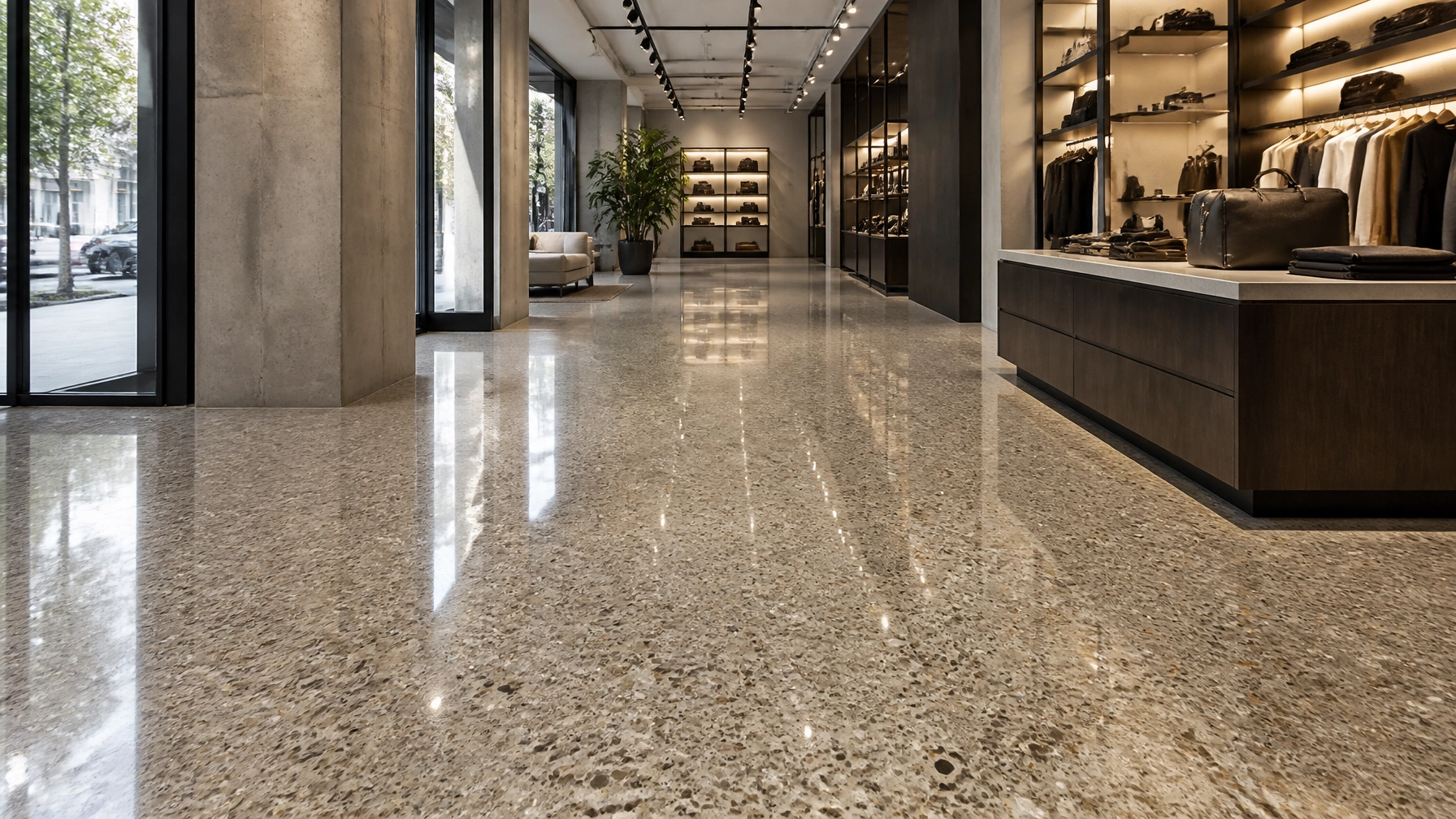
| Class D | Large Aggregate | ~1/4 inch | Coarse stones clearly exposed, delivering a terrazzo-like aesthetic. |
Each exposure level carries distinct implications for substrate preparation and aesthetic uniformity. For example, deeper cuts remove more of the initial trowel layer, which can help eliminate surface blemishes, but alters the monolithic appearance of the slab.
3. What is a Cream Finish? (Class A Exposure)
A cream finish is achieved by executing a very shallow cut that polishes exclusively the top layer of cement fines and paste, leaving the underlying aggregate hidden.
Key Advantages of a Cream Finish
- Monolithic, Minimalist Aesthetic: The absence of visible stone creates a sleek, contemporary canvas that complements modern architectural designs.
- Reduced Cutting Depth: Shallower grinding minimizes dust generation and accelerates the initial mechanical sequencing of the project.
Critical Considerations and Limitations
- Slab Quality Dependency: Because the grinder removes minimal material, any pre-existing blemishes, trowel marks, patching, or surface waviness in the raw concrete will remain visible.
- Less Visual Forgiveness: While aggregate-heavy floors can visually mask minor wear patterns, a uniform cream surface showcases surface abrasion more directly, requiring consistent adherence to maintenance protocols after turnover.
To explore our comprehensive capabilities for preparing and treating concrete substrates, review our polished and sealed concrete services.
4. Polished Concrete vs. Alternative Flooring Systems
When designing a facility, stakeholders often weigh polished concrete against other high-performance options. A methodical evaluation of long-term durability, maintenance, and structural fit is essential.
Polished Concrete vs. Epoxy Resinous Flooring
- Polished Concrete: Utilizes the existing structural slab with no topical resin film to scratch or delaminate. It offers exceptional longevity under heavy foot and wheeled traffic when properly maintained.
- Epoxy Resinous Systems: Provides a seamless, high-build membrane with superior chemical and abrasion resistance: ideal for commercial kitchens, pharmaceutical plants, and manufacturing facilities. For more details on resinous options, visit our epoxy resinous flooring page.
Polished Concrete vs. Tile, Stone, and Resilient Flooring
- Tile and Stone: Deliver diverse aesthetic patterns, but grout lines introduce vulnerability to staining, cracking, and higher labor costs for deep cleaning.
- Vinyl, LVT, and Carpet: Offer softer, more acoustically forgiving surfaces underfoot, but suffer from shorter service lifecycles in high-traffic environments, frequently requiring replacement cycles that increase total lifecycle expenditure.
- Polished Concrete: While harder and less resilient underfoot, polished concrete eliminates topical wear layers, yielding lower ongoing maintenance overhead and superior durability over decades of service.
5. A Pragmatic Decision-Making Framework
Before committing to a specific finish level or aggregate exposure, project managers, architects, and owners should address several foundational diagnostic questions:
- What is the current condition of the substrate? If the slab exhibits significant cracking, patching, or uneven finishing, a cream finish may highlight those flaws, whereas a Class C or D aggregate exposure can blend imperfections into a textured stone pattern.
- What are the operational demands of the space? Heavy foot traffic, retail display requirements, and warehouse forklift circulation each dictate different gloss and skid-resistance thresholds.
- What is the facility’s maintenance capacity? Establishing a routine dust-mopping and pH-neutral cleaning regimen is vital for preserving sheen, particularly for Level 3 and Level 4 high-gloss finishes.
By answering these questions collaboratively during pre-construction planning, you ensure that the specified flooring system performs reliably on day one and maintains its structural integrity long after project turnover.
To discuss your upcoming commercial, residential, or government project requirements with our technical team, explore our complete service offerings or reach out to partner with us.