When property owners, architects, and facility managers reach the final stages of a renovation or new build, the conversation frequently turns to the slab beneath their feet. Concrete is no longer viewed merely as a structural subfloor waiting to be covered up. Instead, exposed concrete finishes: specifically polished and stained surfaces: have become premier design choices for residential, commercial, and government facilities alike.
However, specifying the correct finish requires more than a casual glance at a mood board. At Showcase Finishing Systems, our consulting approach begins with a simple truth: the right choice is dictated by site-specific conditions, operational demands, and long-term maintenance realities rather than surface-level aesthetics.
Before choosing between mechanical refinement and chemical coloration, project stakeholders must evaluate how the floor will perform long after project turnover. In this guide, we break down the fundamental differences in processes, durability, maintenance, and ideal applications to help you make an informed decision.
The Core Difference: Mechanical Refinement vs. Chemical Coloration
To understand which system fits your environment, you must first examine how each finish is achieved. While both options start with a concrete substrate, their installation pathways diverge significantly.
Polished Concrete: The Mechanical Evolution
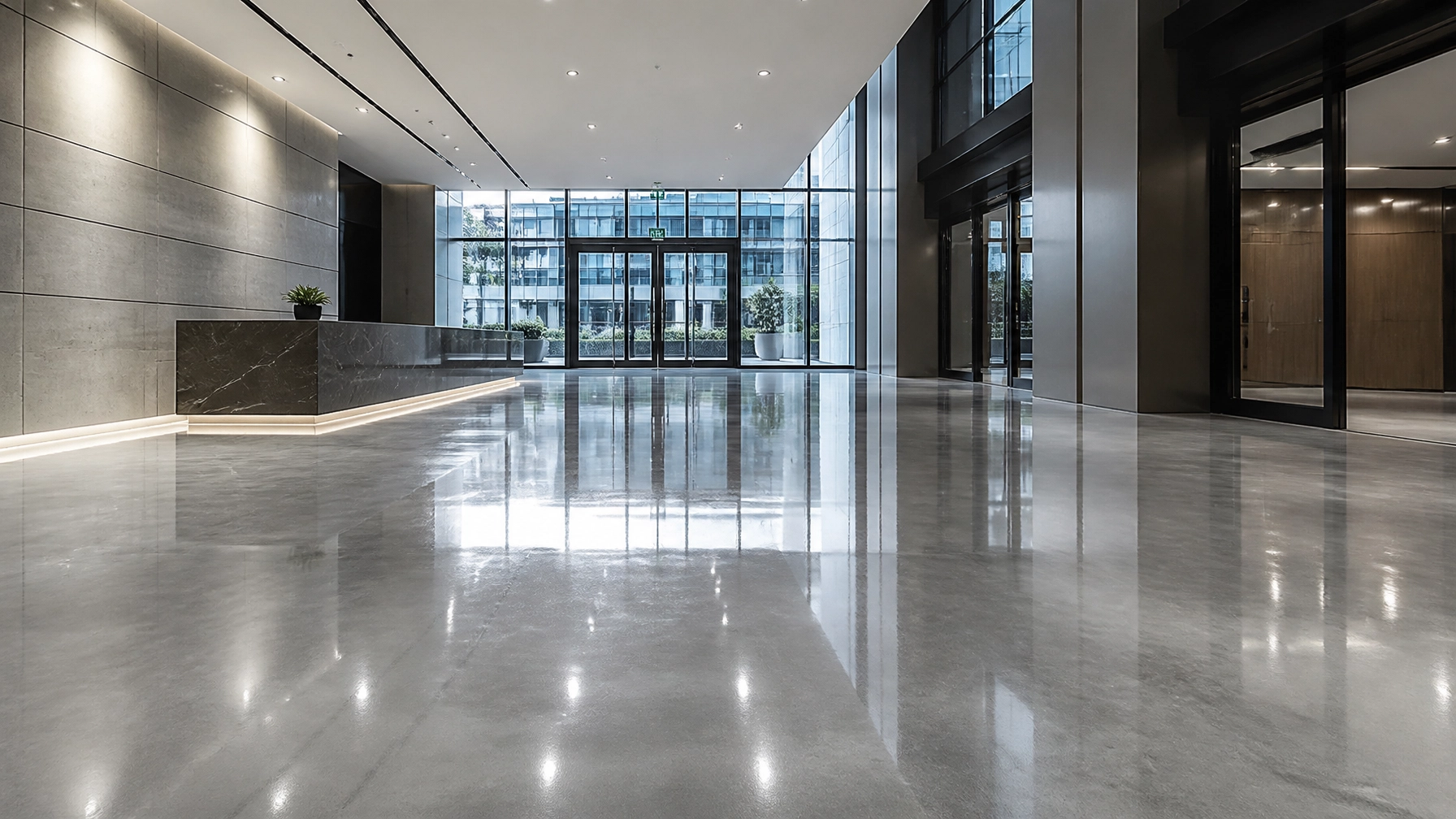
Polished concrete is created through a rigorous multi-step mechanical process. Rather than applying a topical coating, technicians use heavy-duty planetary grinders equipped with industrial diamond abrasives to hone and refine the concrete slab itself: much like natural stone is polished.
- The Grinding and Honing Phase: Successively finer diamond grits remove surface imperfections and open the concrete pores.
- Chemical Densification: A liquid hardener or densifier is applied to chemically react with free lime in the concrete, creating calcium silicate hydrate and locking the matrix into a dense, abrasion-resistant surface.
- Final Refinishing: Polishing continues to the desired sheen level, ranging from a matte satin to a mirror-like high gloss.
The resulting wear layer is the hardened concrete itself. For more details on our mechanical capabilities, explore our polished and sealed concrete services.
Stained Concrete: The Chemical Transformation
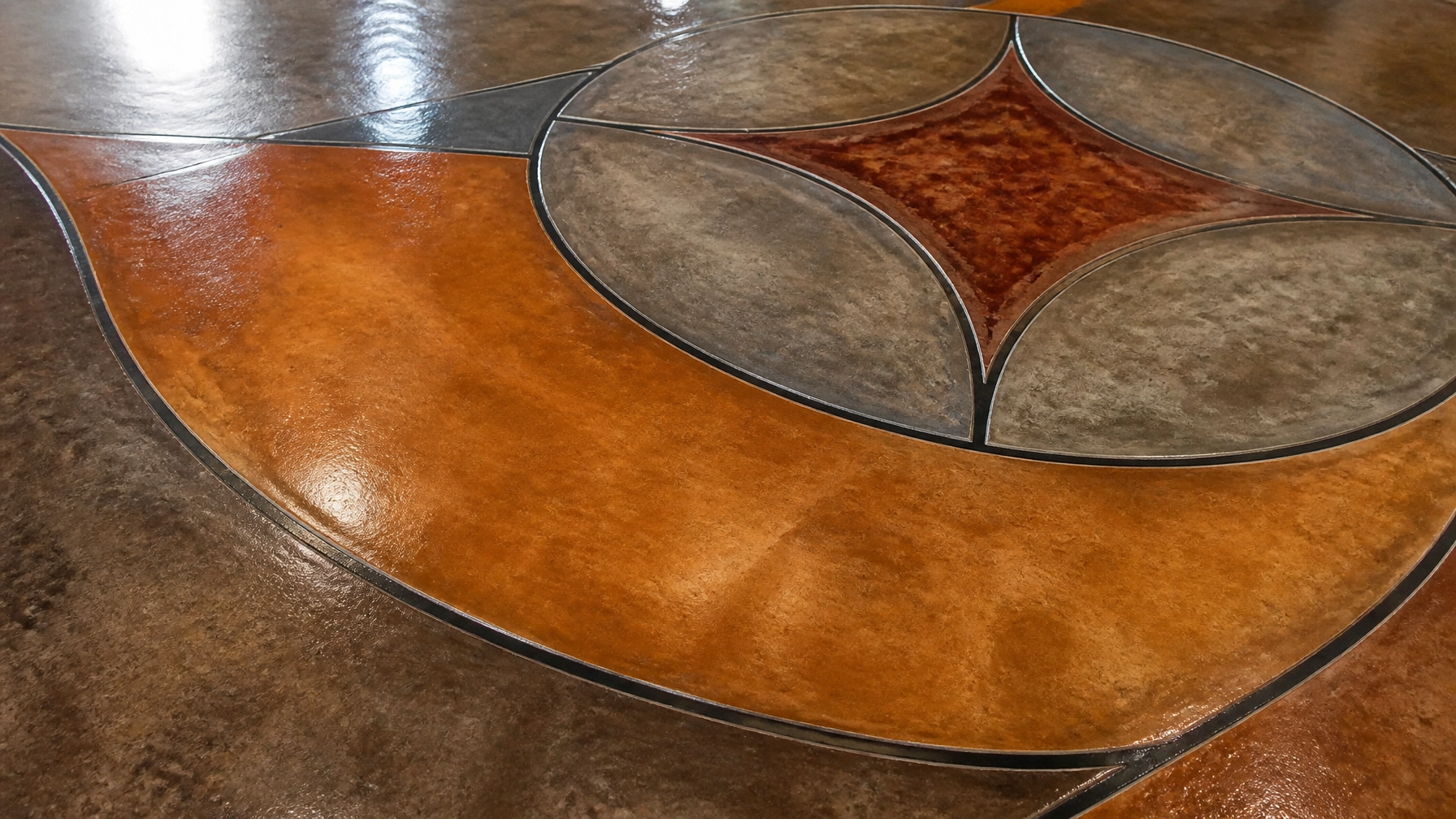
Stained concrete, by contrast, introduces color to the substrate through chemical or water-based penetration before applying a protective topical barrier.
- Surface Preparation: The slab is cleaned and prepped to ensure the chemical formula can absorb evenly.
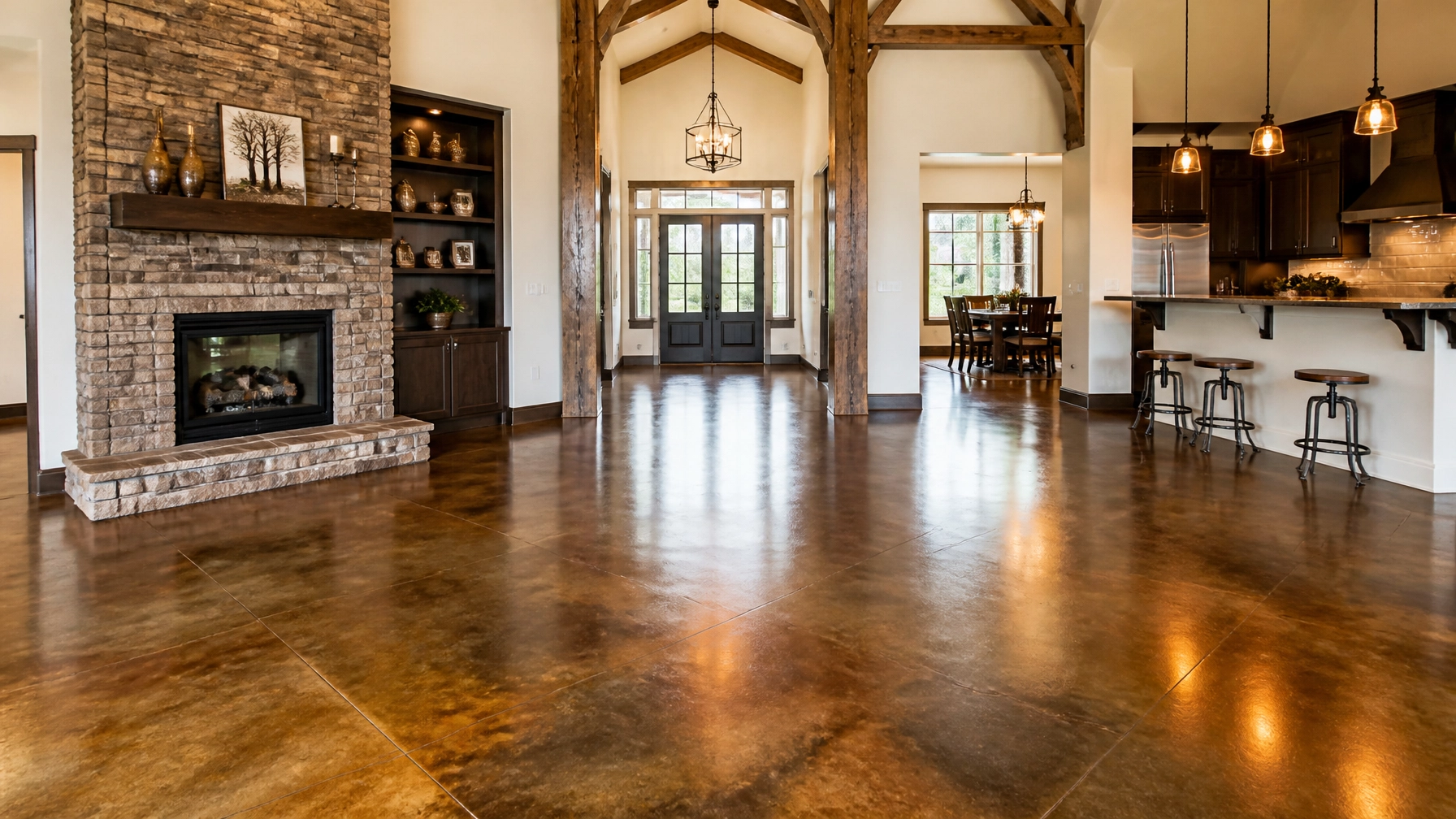
- Stain Penetration: Acid-based stains react chemically with the minerals inside the concrete to produce rich, variegated, earth-toned effects. Water-based or acrylic stains penetrate the pores to offer a broader, more uniform spectrum of vibrant colors.
- Topical Sealer Application: Because stains alone do not provide a protective wear layer, a clear sealer: such as an acrylic, polyurethane, or epoxy film: is applied over the stained concrete to lock in the color, resist moisture, and establish the surface sheen.
Visualizing the Finished Aesthetics
Appearance is often the initial catalyst for the design debate, but it is critical to evaluate how each look holds up under real-world conditions.
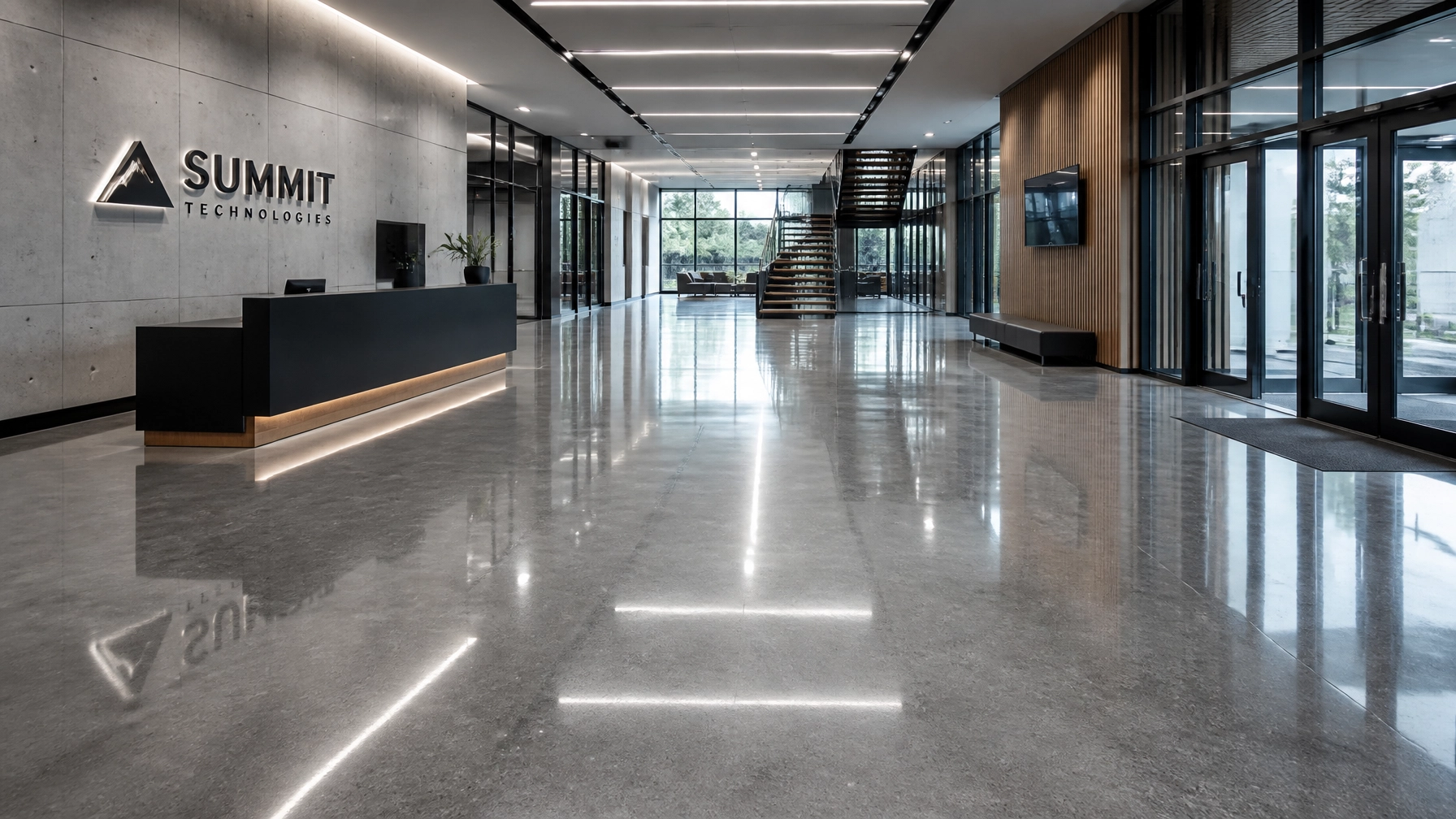
- Polished Concrete Appearance: Offers a clean, sophisticated, architectural aesthetic. The natural aggregate can be exposed depending on the depth of the initial grind. It reflects ambient light effectively, brightening interior spaces and projecting industrial-chic elegance or minimalist corporate polish.
- Stained Concrete Appearance: Delivers unmatched decorative versatility. Acid stains produce unpredictable, organic marbling that mimics natural stone, leather, or aged patina. Water-based options allow for bold, customized graphic color blocks and vibrant hues tailored to retail brand standards.
When evaluating styles, consider the long-term visual trajectory:
- On day one: Both options offer a stunning, flawless finish that elevates the entire room's architectural profile.
- After turnover: A polished concrete floor maintains its optical clarity through the hardness of the slab. A stained concrete floor relies entirely on its topical sealer; if that protective film scratches, the visual integrity of the floor can begin to degrade in high-traffic zones.
Durability and Lifespan: What Lies Beneath the Surface
Operational wear and tear are the true litmus tests for any flooring system. Facility managers cannot afford unexpected downtime or premature resurfacing.
Structural Resilience
- Polished Concrete: Because the wear layer is hardened concrete, it resists heavy foot traffic, rolling cart loads, and abrasive debris exceptionally well. It does not chip, peel, or delaminate because there is no independent coating to fail. In commercial and institutional environments, properly maintained polished concrete can last for decades.
- Stained Concrete: While the color penetrating the slab is permanent and will not fade or flake off like paint, the protective sealer acts as the primary barrier. In high-traffic corridors, retail aisles, or commercial kitchens, this topical film is susceptible to scuffing, micro-scratching, and eventual wear-through.
Maintenance Realities: Day-to-Day and Long-Term
A common miscalculation during the specification phase is underestimating post-installation upkeep. We advise clients to evaluate maintenance requirements with the same rigor applied to upfront installation.
Routine Upkeep (Both Systems)
- Regular dust mopping or vacuuming to remove abrasive grit and particulate matter.
- Periodic damp mopping using neutral, pH-balanced cleaning agents. Harsh alkaline or acidic cleaners will degrade sealers on stained floors and can dull polished surfaces over time.
Long-Term Upkeep
- Polished Concrete: Celebrated as one of the lowest-maintenance flooring systems available. It requires no waxing, stripping, or routine resealing in standard interior settings. The densified matrix naturally repels dust and moisture.
- Stained Concrete: Requires a proactive maintenance schedule. Depending on traffic volume, the protective sealer must be periodically reapplied (typically every one to three years) to prevent moisture intrusion and restore surface gloss. Neglecting this maintenance cycle leaves the underlying stained concrete vulnerable to staining and wear.
Best Applications: Matching the System to the Environment
To ensure structural success, "slow down to speed up." Answer these fundamental diagnostic questions before selecting your system:
- What is the primary activity level? Heavy rolling loads and high foot traffic favor mechanical polishing.
- What are the moisture conditions of the slab? High moisture vapor emission rates (MVER) can compromise topical sealers on stained floors, whereas breathable polished concrete often manages moisture better if properly prepped.
- Is bespoke branding or a complex decorative color scheme required? Retail showrooms and artistic spaces often benefit from the custom design potential of stained concrete.
- What is the tolerated downtime for future maintenance? Facilities requiring 24/7 operational continuity benefit from the minimal upkeep of polished concrete.
| Environment | Recommended System | Primary Rationale |
|---|---|---|
| Corporate Lobbies & Open Offices | Polished Concrete | High durability, low maintenance, professional light reflection |
| Retail Boutiques & Showrooms | Stained Concrete | Custom design flexibility, rich color palettes matching brand identity |
| Warehouses & Light Industrial | Polished Concrete | Superior abrasion resistance, zero coating delamination under heavy loads |
| Restaurants & Hospitality Spaces | Stained or Polished | Stained offers warm decorative appeal; polished offers robust wear resistance |
Partnering with Showcase Finishing Systems
Choosing between stained and polished concrete is an important operational decision. Substrate age, vapor transmission, structural integrity, and long-term service cycles all dictate the ideal path forward.
At Showcase Finishing Systems, we partner with architects, business owners, and facility managers to evaluate site conditions objectively. Whether you need the industrial endurance of a mechanically refined slab or the custom decorative warmth of a chemical stain, our team delivers precision craftsmanship built to last.
To discuss your upcoming project requirements, explore our services overview or contact our team today.