Cleaner exposed-slab appearance
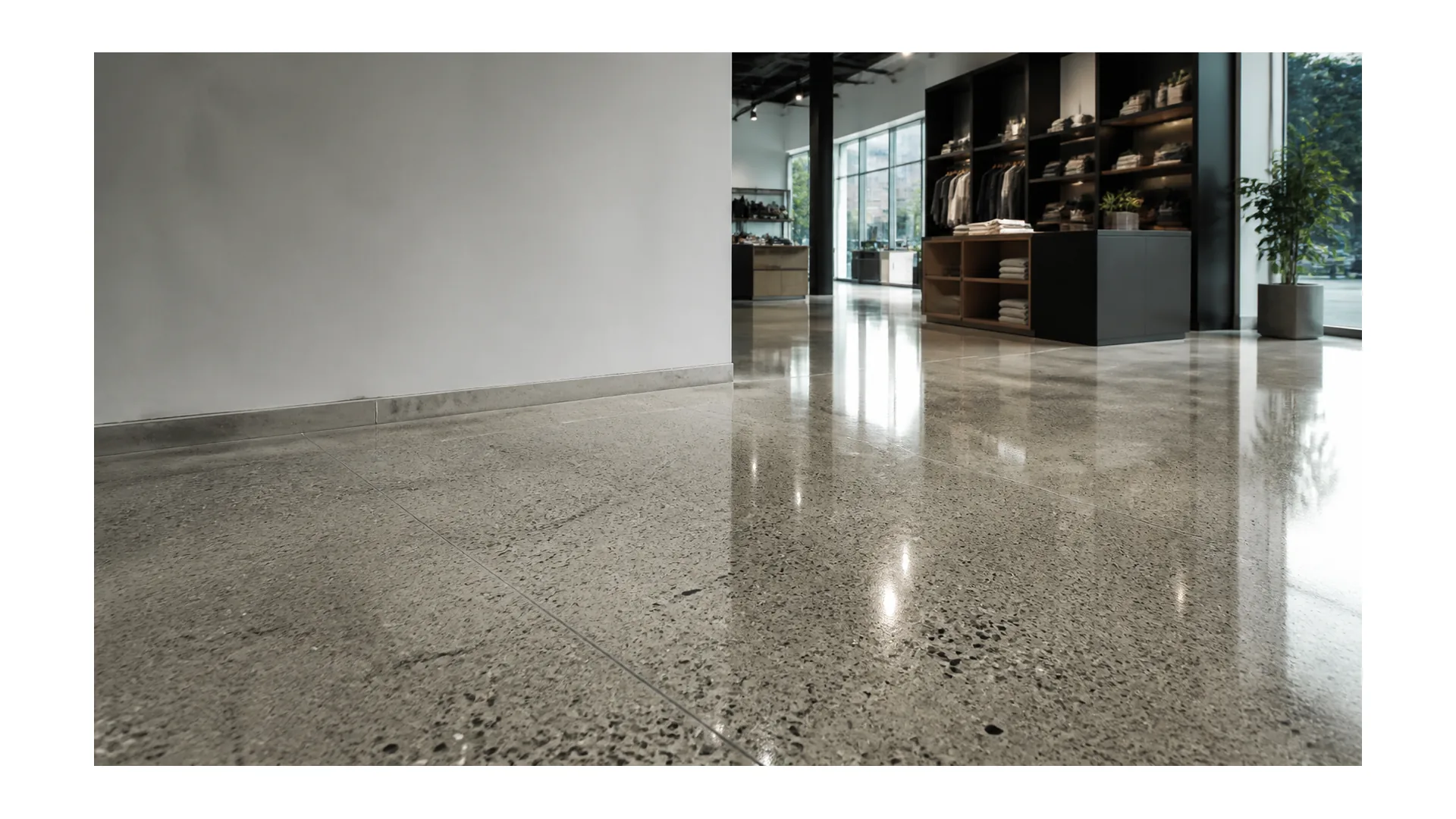
Polishing can increase reflectivity and make concrete feel intentionally finished.

Concrete polishing contractor
Polished concrete uses the slab itself as the finished surface, with grinding, densifying, honing, and polishing selected around the target look.
Polished concrete can create a durable, reflective, lower-maintenance surface in the right conditions. Aggregate exposure, repairs, previous coatings, flatness, and moisture all shape the outcome.
Polishing can increase reflectivity and make concrete feel intentionally finished.
A suitable slab can become the finished floor without another flooring layer.
Gloss and exposure can be tuned to the building and budget.
Polished concrete is a good fit when the slab can support the look and use. It is not ideal when heavy chemical exposure, major slab defects, or hidden moisture call for another system.
Polished Concrete is a flooring service focused on mechanically refining a concrete slab through grinding, densifying, honing, and polishing to create a finished surface.
It is commonly evaluated for hangars, showrooms, retail floors, public interiors, residential lower levels, corridors, education spaces, and existing slab renovations, with the exact system selected around traffic, substrate condition, maintenance needs, and appearance goals.
Yes, in selected residential spaces where the slab condition, finish expectations, and maintenance plan make polished concrete realistic.
Yes. Showcase also evaluates polished concrete for commercial, industrial, institutional, hospitality, retail, education, and specialty environments when the use case calls for it.
Existing coatings, adhesives, cracks, joints, stains, and slab quality must be evaluated before a polishing sequence is chosen. We also look at moisture, movement, transitions, drainage, access, cleaning routines, and the desired finished look before recommending a system.
Timing depends on square footage, existing conditions, prep needs, product cure time, detail work, and whether the space must stay partially open during construction.
Return-to-service depends on the selected material and site conditions. Some systems support faster foot traffic, while others need a longer cure or protection window before normal use.
Cost is shaped by prep, repairs, access, moisture mitigation, material selection, finish level, phasing, cove or edge details, and how quickly the space needs to return to use.
Polished concrete usually needs dust control, compatible cleaners, routine scrubbing where appropriate, and avoidance of residue-forming products. The maintenance plan should match the finish, traffic, cleaning chemicals, and expected level of appearance over time.
In many cases, yes. Slip resistance is planned through texture, finish choice, surface profile, grout or aggregate selection, and the balance between traction and cleanability.
Moisture can affect bonding, appearance, cure, and long-term performance. The slab or substrate should be evaluated before the final recommendation is made.
Sometimes, but only after confirming the existing surface is stable, bonded, compatible, and suitable for the new flooring system.
Options may include color, sheen, texture, aggregate exposure, pattern, layout, grout tone, broadcast blend, or topcoat selection depending on the service.
The better choice depends on substrate condition, moisture exposure, traffic, cleaning routines, budget, schedule, and the level of finished appearance expected.
It may not be the right fit if the substrate is unstable, moisture is unmanaged, movement is excessive, the use case calls for a different system, or the appearance goal does not match the material.
Service life depends on correct prep, system selection, traffic, cleaning, exposure, and maintenance. The goal is to match the floor to real use rather than rely on a generic life-span claim.
Many flooring systems can be repaired, but repair visibility and method depend on the material, age, color, texture, and how the floor has worn.
Useful details include photos, square footage, location, substrate type, current flooring, known moisture issues, intended use, timing, desired finish, and whether the space is occupied.
Yes. Performance fit comes first. Once the right system family is clear, color, texture, gloss, layout, and decorative options can be selected with fewer compromises.
Showcase focuses on system fit, prep, clean detailing, and realistic field conditions for commercial, residential, industrial, and institutional projects across South Jersey, Greater Philadelphia, and the Northeast.