
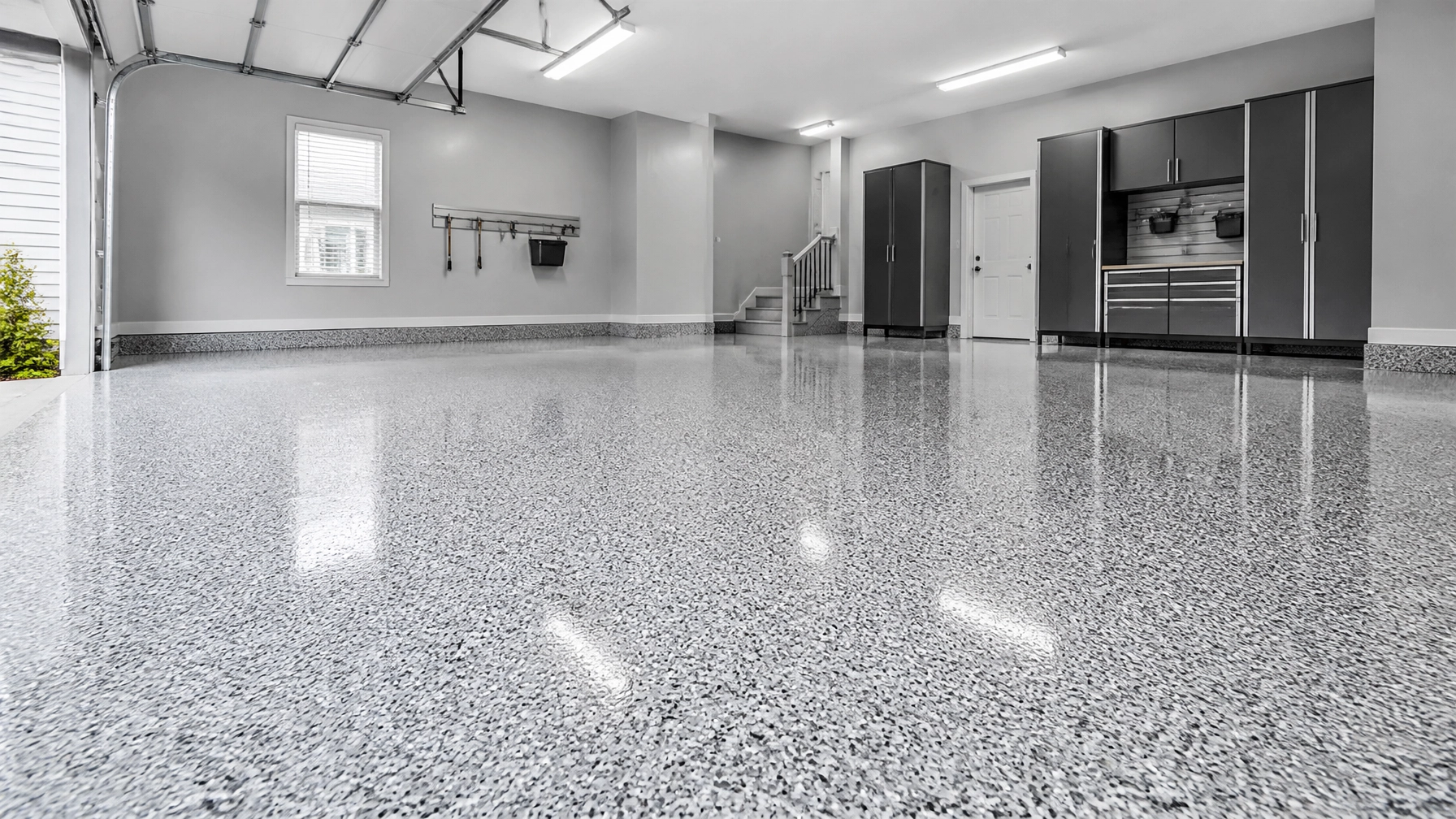
When evaluating flooring upgrades for a residential garage, the conversation often shifts immediately to product features. However, for property owners in South Jersey and the Greater Philadelphia area, the decision between epoxy and polyaspartic systems should be a "conversation about fit" rather than a comparison of marketing specs.
At Showcase Finishing Systems, we approach every project through a diagnostic lens. The right choice is dictated by site-specific conditions: the age of your concrete, your local climate’s freeze-thaw cycles, and your specific requirements for "return-to-service."
Whether you are looking for residential garage upgrades or a durable solution for a high-traffic workshop, understanding the technical honesty of these materials is the first step toward a successful installation.
The Diagnostic Phase: Assessing Your Environment
Before choosing a color or system build, professional garage floor epoxy installers must answer foundational questions about the substrate. The success of any resinous system depends 90% on preparation and 10% on the product itself.
Key Evaluation Questions:
- Substrate Stability: Is the concrete slab prone to shifting or cracking due to seasonal temperature swings?
- Moisture Levels: What is the vapor emission rate of the slab? (High moisture can cause delamination in non-breathable systems).
- UV Exposure: Will the garage door remain open for extended periods, exposing the floor to direct sunlight?
- Operational Downtime: How quickly do you need to move vehicles back into the space?
Technical Comparison: Epoxy vs. Polyaspartic
In 2026, the industry has moved toward sophisticated hybrid systems, but the choice of a base and topcoat remains critical.

1. Durability and Lifecycle
- Epoxy Systems: Traditionally the industry standard, epoxy provides excellent build thickness and can help level minor substrate imperfections. However, it is inherently more brittle. On day one, it looks identical to polyaspartic; however, after turnover and several seasons of use, it may be more susceptible to "hot tire pickup" or chipping under heavy impact.
- Polyaspartic Systems: These are technically a sub-category of polyurea. They offer superior flexibility, meaning they move with the concrete as it expands and contracts. This elasticity makes polyaspartic significantly more resistant to cracking and abrasion over a 15-to-20-year lifecycle.
2. UV Stability and Aesthetics
One of the "hidden" issues with standard epoxy is its vulnerability to ultraviolet light. Over time, epoxy tends to amber or "yellow," particularly near the garage door entrance. Polyaspartic is inherently UV-stable; it maintains its clarity and color regardless of sun exposure.
3. Return-to-Service (Cure Time)
This is often the deciding factor for busy homeowners.
- Epoxy: Typically requires 24–72 hours for foot traffic and up to 7 days before vehicles can be parked.
- Polyaspartic: Engineered for rapid curing. Many systems are walkable in 4–6 hours and vehicle-ready in just 24 hours. This "slow down to speed up" philosophy allows for a professional installation that doesn't disrupt your life for a week.
| Feature | Professional Epoxy | Polyaspartic / Hybrid |
|---|---|---|
| Vehicle Traffic | 3–7 Days | 24 Hours |
| UV Resistance | Poor (Yellows) | Excellent (Stable) |
| Flexibility | Lower (Brittle) | Higher (Impact Resistant) |
| Expected Life | 5–10 Years | 15–20 Years |
Strategy: The Hybrid Approach
Many leading garage floor epoxy installers now recommend a hybrid system. This often involves an epoxy or polyurea basecoat: which bonds exceptionally well to properly prepared (mechanically ground) concrete: paired with a polyaspartic topcoat for maximum chemical and UV resistance.

Using premium materials from suppliers like Sherwin-Williams and MAPEI, we can tailor the chemical makeup of your floor to match the specific demands of the Greater Philadelphia climate.
Long-Term Performance: Short-Term Convenience vs. Lifecycle Reality
When reviewing system options, it is vital to contrast short-term convenience with long-term realities.
- On Day One: Epoxy can be a practical fit when the garage sees lighter use and the project can accommodate a longer cure window.
- After Turnover: In garages exposed to temperature swings, hot tires, road salts, and repeated vehicle traffic, polyaspartic systems often perform better over time because of their flexibility, abrasion resistance, and UV stability.
At Showcase Finishing Systems, we prioritize technical honesty. We would rather advise a client to slow down, test the slab properly, and select the right system for the environment than install a coating that we know is poorly matched to a high-moisture or movement-prone substrate.
Selecting the Right Garage Floor Epoxy Installers
The industry is unfortunately saturated with "one-day" installers who skip the foundational steps of substrate preparation. To ensure your investment lasts, look for these markers of expertise:
- Mechanical Preparation: Avoid any contractor who suggests "acid etching." Professional results require industrial diamond grinding or shot-blasting to create a CSP (Concrete Surface Profile) that ensures a mechanical bond.
- Moisture Testing: A reputable installer will always test for moisture vapor transmission before application.
- Material Transparency: They should clearly identify the brands they use (e.g., Schluter-Systems or MAPEI) and provide technical data sheets upon request.
- Warranty Clarity: Understand exactly what is covered. A "lifetime" warranty often has exclusions for substrate failure or moisture: issues that should have been addressed during the diagnostic phase.

Maintenance and Long-Term Care
We treat the maintenance phase with the same gravity as the installation itself. A high-performance garage floor is not "no-maintenance"; it is "low-maintenance."
- Routine Cleaning: Dust and grit can act as an abrasive. Regular sweeping or microfiber mopping is essential.
- Chemical Spills: While polyaspartic is highly resistant to oils and salts, common in South Jersey winters, spills should be wiped up promptly to prevent staining of the topcoat.
- Inspection: Once a year, inspect for any signs of mechanical damage or substrate movement. Addressing a small crack early can prevent widespread delamination.
Conclusion: Making the Strategic Decision
The choice between epoxy and polyaspartic isn't about which product is "better" in a vacuum. It’s about which system aligns with your building’s age, your operational downtime requirements, and your long-term ownership mindset.
If you are ready for a methodical evaluation of your garage floor, contact the team at Showcase Finishing Systems. We specialize in providing durable, high-end flooring solutions for residential, commercial, and government clients throughout South Jersey and Greater Philadelphia.